
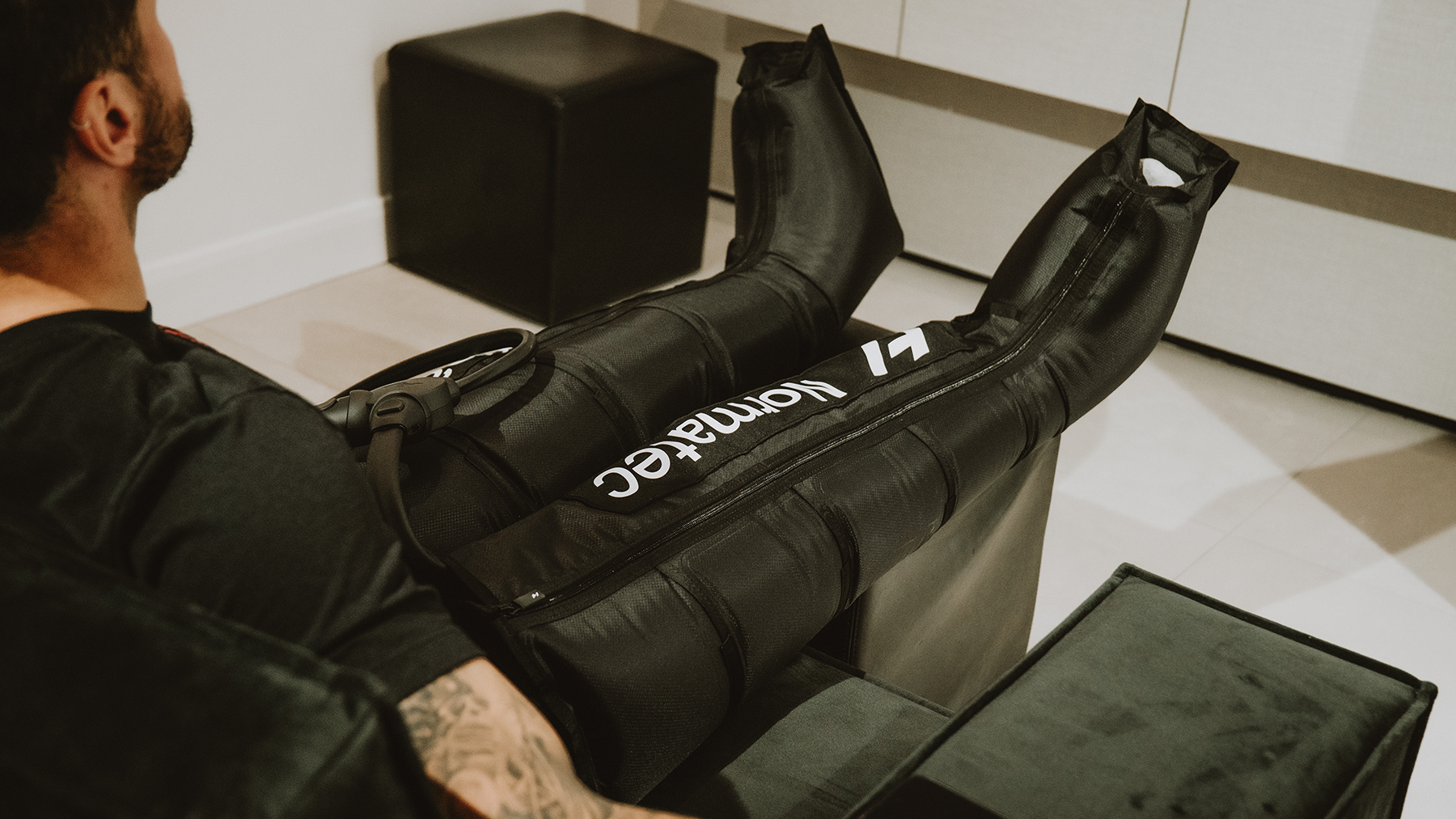
Compression boots can look more intense than they actually feel. That is usually why the safety question comes up so early. They look medical, the pressure seems strong from the outside, and many people have never tried anything similar before.
In reality, they are often a straightforward, low-effort option for tired or heavy legs when used appropriately. The important part is that they are not automatically right for everyone, so safety comes down to suitability, comfort, and knowing when caution matters.
Key takeaways
Are Compression Boots Safe?
If you want the short version before diving in, this is what matters most.
- Compression boots are generally safe for many healthy adults when used appropriately.
- They are not suitable for everyone, especially if you have certain circulation, clotting, skin, nerve, or heart-related issues.
- A session should feel firm and supportive, not painful.
- At Brysk, compression boots are guided, adjustable, and used as a calm lower-body recovery and wellbeing session.
- If you are unsure, it is always better to ask before booking than to guess.
Jump to
The short answer
Yes, compression boots can be safe, especially when they are used in a sensible, guided setting and the person using them is a good fit for the session.
The important part is that “safe” does not mean “right for absolutely everyone”. Compression changes how pressure is applied through the legs, so it makes sense to be cautious if you have an underlying medical issue, reduced sensation, unusual swelling, or anything affecting circulation.
The clearest answer is this: compression boots are often safe for suitable people, but they are not something to book blindly if you already know you have a relevant medical issue or are unsure about suitability.
When compression boots are usually a straightforward option
Compression boots are often a sensible option for many people when the basic suitability picture is straightforward.
1. You are otherwise healthy
If you do not have a known clotting issue, major circulation problem, serious heart condition, open wound, active infection, or reduced sensation in the legs, compression boots will often sit more in the category of a straightforward recovery session than a medically complex one.
2. You want a calm, low-effort lower-body session
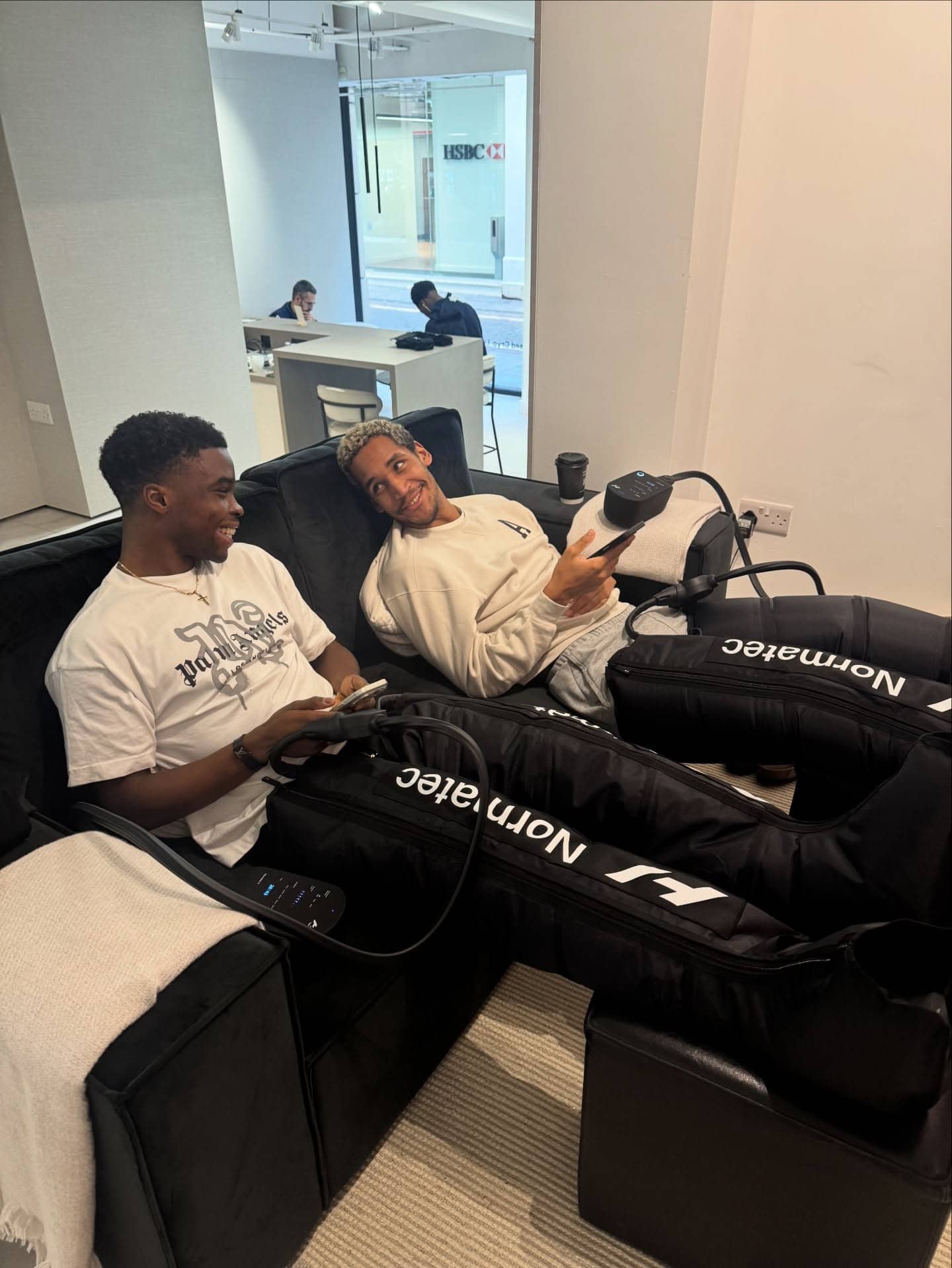
In the Brysk studio, compression is positioned as a practical, guided session rather than something dramatic or intense. That matters. You are not being pushed into something aggressive. You are sitting back while the boots run through a structured 30-minute cycle designed to feel manageable and supportive.
3. The pressure feels firm rather than painful
Most people describe the sensation as firm, supportive, and easy to settle into. It should feel like rhythmic waves of pressure moving through the legs, not pain, panic, or anything you feel you have to tolerate just because it is “doing something”.
4. The settings can be adjusted
This is an important safety point. More pressure is not automatically better. At Brysk, settings are adjusted to comfort and can be changed during the session if needed, which helps keep the experience controlled and appropriate.
Not sure whether compression boots are the right fit?
If you are unsure about suitability, the safest thing to do is ask before booking. A quick conversation can usually make it much clearer whether compression sounds like a sensible option for you.
When you should be cautious or avoid booking
Compression boots may not be the right fit, or may need medical advice first, if you have:
1. A history of DVT or clotting issues
If you have had deep vein thrombosis or another clotting problem, do not assume compression is automatically appropriate.
2. Certain circulation or vascular conditions
If you have poor circulation, severe varicose-vein complications, peripheral arterial disease, or another known vascular issue, that needs proper caution.
3. Certain heart conditions
Because compression affects how pressure and fluid move through the legs, any cardiac issue involving circulation or fluid balance should be taken seriously rather than guessed at.
4. Reduced sensation or neuropathy
If you do not reliably feel pressure, discomfort, or changes in the legs, that alters the safety picture.
5. Open wounds, infections, or irritated skin on the legs
If the skin is broken, infected, or actively irritated, compression may not be appropriate.
6. Unexplained swelling
If one or both legs are swollen and you do not know why, that is not something to self-manage through a recovery session.
7. Pregnancy or anything you are unsure about
If something feels medically grey, ask first. A cautious question is always better than a reckless booking.
Recent leg surgery, uncontrolled blood pressure, or any known circulatory condition are also reasons to ask first rather than assume compression is suitable.
And if you are not sure whether compression is the right starting point at all, it can also help to look at how people choose the right Brysk session for their goals.
What compression boots should feel like when they are being used properly
A good compression session should feel structured, firm, and supportive.
In Brysk’s setup, the boots run in rhythmic waves through the legs, usually from the feet upwards, creating a lower-body session that many people find surprisingly easy to relax into. The pressure should feel noticeable, but not alarming.
If you want a fuller picture of the sensation itself, it also helps to read about what compression boots actually feel like in practice.
What they should feel like
- Firm
- Controlled
- Rhythmic
- Supportive
- Adjustable if needed
What they should not feel like
- Painful
- Sharp
- Crushing
- Numb
- Wrong in a way you feel you should ignore
If a session feels painful, numb, or simply wrong, that is not something to push through. Compression should feel firm and controlled, not alarming.
Studio sessions vs home devices
For many people, the real question is not just whether compression boots are safe, but whether it is smarter to try them in a studio first or buy a device for home use.
A simple comparison
| Option | Where it often wins | Where it may fall short |
|---|---|---|
| Studio session at Brysk | Guided setup, adjustable pressure, easy first try, no equipment cost, no setup stress | Ongoing cost if you want to use it regularly |
| Home device | Convenient for frequent use at home, more control over timing | Upfront cost, variable quality, easier to misuse or abandon |
For a lot of people, the studio route is the more sensible starting point because it lets them work out whether the sensation suits them before investing further.
How Brysk approaches compression boots safely
Compression boot therapy at Brysk is delivered:
- In a guided studio setting
- With adjustable pressure
- In a seated, low-effort format
- With support from the team if anything feels too strong or needs changing
- As a practical recovery and wellbeing session, not an intense endurance challenge
That combination matters. Safety is not just about a contraindications list. It is also about delivery, comfort, and whether the person using the boots actually feels clear on what is happening.
Who usually finds compression boots a good fit at Brysk?
Compression boots often suit people who want something that feels:
- Lower-effort
- Easy to fit around the week
- Supportive for tired or heavy legs
- Calm rather than intense
That often includes:
- Gym-goers and active people
- People on their feet all day
- Desk-based professionals
- People dealing with heavy or sluggish legs after travel
- First-timers who want a simple, seated recovery option
That overlaps quite closely with the kinds of people who tend to use Brysk in the first place, especially those looking for recovery and wellbeing sessions in Manchester that fit around real life.
So, are compression boots safe?
For many suitable people, yes.
Compression boots can be a safe and useful lower-body recovery session when they are used appropriately, adjusted properly, and matched to the right person.
But “generally safe” is not the same as “right for everyone”.
That is the part that matters most.
The safest approach is not fear, and it is not blind confidence either. It is simple suitability checks, realistic expectations, and a willingness to ask before booking if anything feels uncertain.
FAQs
Before booking, most people are not looking for a technical explanation of compression. They usually just want to know whether the session is likely to feel safe, what it should feel like, and whether anything about their situation means they should be cautious.
Are compression boots safe for first-timers?
Often yes, which is one reason many people try them first in a guided studio setting rather than buying a device straight away.
Should compression boots hurt?
No. They should feel firm and supportive, not painful.
What if the pressure feels too strong?
At Brysk, pressure can be adjusted during the session. If it feels too strong, say so rather than pushing through it.
Who should be cautious with compression boots?
People with certain clotting issues, circulation problems, skin problems, neuropathy, unexplained swelling, or some heart conditions should be cautious and may need medical advice first.
Are compression boots just for athletes?
No. They are also used by people with heavy, tired, or overworked legs after long days standing, sitting, travelling, or moving through busy weeks.
Can I book compression boots on their own?
Yes. At Brysk they can be booked as a standalone session or alongside other recovery and wellness options.

Thinking about trying compression boots in Manchester?
Brysk offers guided compression boot sessions in Manchester city centre as part of a calm, practical recovery and wellbeing setup. If you are curious but unsure whether compression sounds like the right fit, ask first. A quick conversation is often enough to make that much clearer.
Want a bit of guidance before you start?
Book a session or speak to the team if you’d like help choosing what feels right.