

Hyperbaric oxygen therapy is one of those sessions people often struggle to judge the timing of before they book. It is longer than a quick drop-in treatment, but it is not the kind of appointment that takes up half a day either.
At Brysk, HBOT sessions are available in 60-minute and 90-minute formats. It also helps to allow a little extra time around the session for arrival, settling in, first-time guidance where needed, and the full flow of compression and decompression, so the whole visit feels calm rather than rushed.
That is the most useful way to think about it: not just the chamber time on paper, but how the appointment actually fits into your day.
Key takeaways
- Across the wider HBOT space, sessions often sit somewhere in the 60 to 120-minute range, depending on the setting and protocol
- At Brysk, HBOT sessions are available in 60-minute and 90-minute formats
- The chamber session length is not always the same as the total appointment time because compression, decompression, pre-session guidance, and first-time checks can add to the visit
- 60 minutes is often the most practical and approachable first session
- 90 minutes may suit people who want a longer oxygen exposure or a more extended chamber visit
- 90 minutes is not automatically better; the better option depends on your goals, response, and how consistently HBOT fits into your routine
- HBOT is deliberately longer than Brysk’s shorter recovery sessions, and for many people that longer, calmer format is part of the appeal
Jump to
2. HBOT session lengths
3. Chamber vs appointment time
4. Why appointments take longer
5. Why HBOT takes longer
6. Is 60 minutes enough?
7. Why choose 90 minutes?
8. When longer makes sense
9. Why 90 isn’t always better
10. 60 vs 90 at a glance
11. Does HBOT feel long?
12. Can it fit into workday?
13. How long do you stay?
14. FAQs
15. Trying HBOT?
16. References
The quick answer
Across the wider HBOT space, session length can vary depending on the setup and the purpose of the session.
At Brysk, the answer is simpler: HBOT sessions are available in 60-minute and 90-minute formats.
It also helps to allow a little extra time around that for first-time guidance where needed, compression and decompression, and the general flow of the visit. That gives you a more realistic sense of how the session fits into your day.
How long are HBOT sessions at Brysk?
Brysk offers two HBOT session lengths:
- 60 minutes
- 90 minutes
The 60-minute session is often the more approachable starting point. It gives you the full chamber experience in a format that still feels realistic to plan around.
The 90-minute session suits people who want a more extended chamber visit and are intentionally making space for something longer.
That matters because HBOT is not positioned at Brysk as a quick pop-in treatment. It is a longer, more structured session designed to feel calmer, more immersive, and more deliberate than a short drop-in service.
Chamber time vs total appointment time
When people ask how long they stay in a hyperbaric chamber, they are often mixing together two slightly different questions:
- How long the chamber session itself lasts
- How much time they should allow overall
At Brysk, the chamber session is either 60 minutes or 90 minutes, depending on what you book.
It still helps to allow a little extra time around that for arrival, settling in, and the full flow of the session. That way, the visit feels planned properly rather than squeezed into the smallest possible gap.
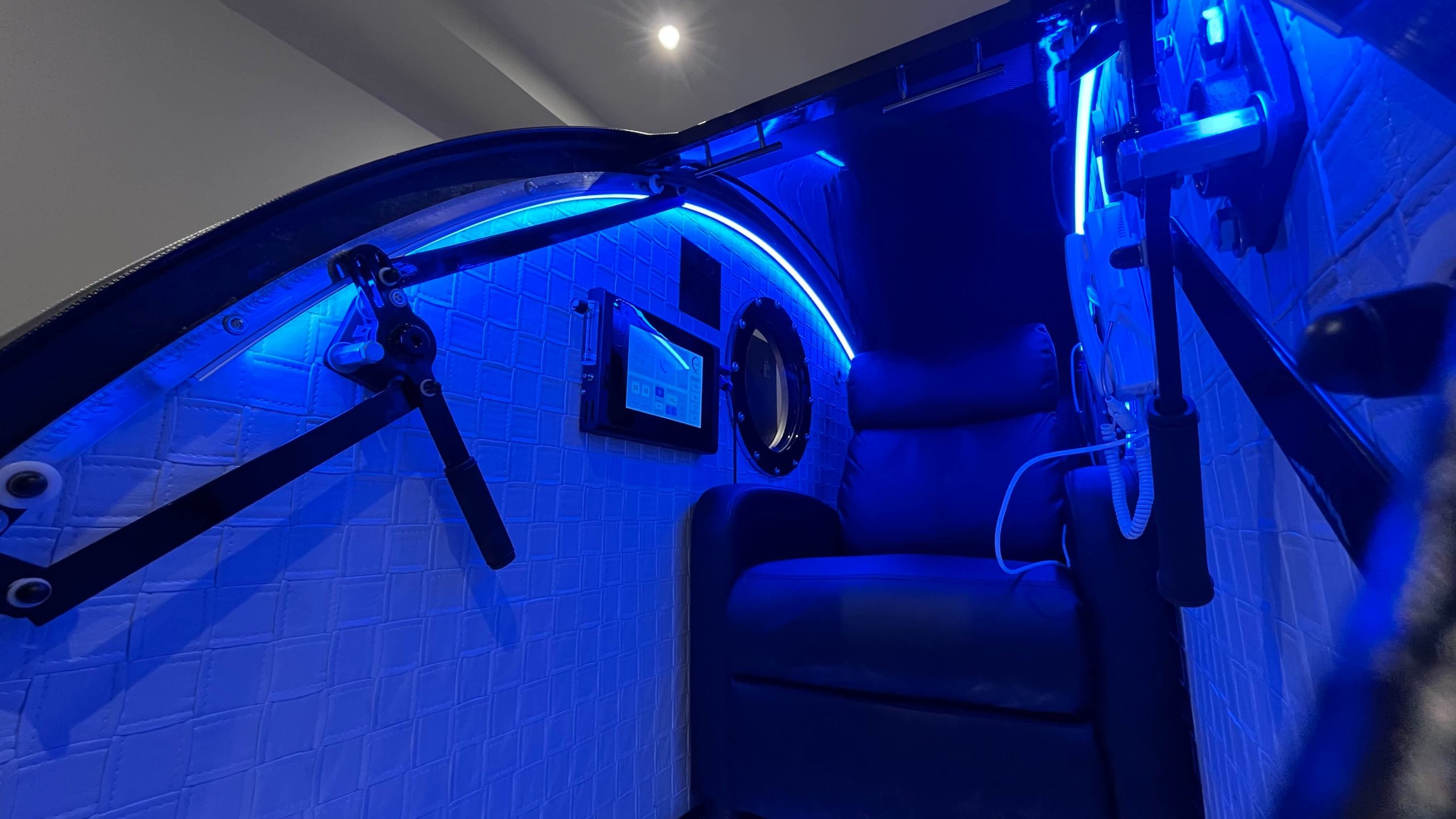
If you want a clearer sense of what that full chamber experience actually involves, it also helps to read what happens during a hyperbaric oxygen session.
Watch: What a hyperbaric oxygen session feels like
MCR Wellness visits Brysk to try the hyperbaric oxygen chamber and shares what the session felt like from a first-timer’s perspective.
Why total appointment time can be longer than the chamber time
If it is your first HBOT session at Brysk, it helps to allow a little extra time because the appointment is not just “minutes in the chamber”. Brysk may need to take you through practical guidance, safety procedures, pre-session checks, and the general flow of the chamber before the session starts. The visit also includes compression and decompression time, which is part of how a hyperbaric session is delivered properly rather than an optional extra around it.
Why HBOT takes longer than people expect
Many wellness and recovery sessions are short, which is one reason HBOT can catch people off guard. It does not work like a quick 10 or 15-minute visit where you turn up, do the session, and head straight back into the rest of the day.
HBOT is longer by design. At Brysk, that longer timing is part of the appeal for people who want a calmer, more structured block of time rather than a quick drop-in treatment.
Is 60 minutes enough in a hyperbaric chamber?
Yes. For most first-time users, 60 minutes is the most sensible starting point. It gives you the full chamber experience without asking you to commit to the longer format before you know how it feels for you. At Brysk, that makes it the more approachable first session for many people.
For many people, that shorter format is not a compromise. It is the version that makes HBOT easier to try, easier to plan around, and easier to repeat consistently if it suits them.
Why would someone choose 90 minutes?
The 90-minute option suits people who want a longer oxygen exposure and are intentionally booking a more extended chamber session. For some people, that longer format feels like part of the value rather than just extra time. It gives the session more room to settle, makes sense for people who already know they enjoy HBOT, and may be the better fit for those who want a longer block of structured recovery in the week.
From a value point of view, the 90-minute session also gives you 50% more chamber time than a 60-minute session, while the additional cost is proportionally smaller. For people who already know they suit HBOT well, the longer format can feel like a stronger use of the visit because it gives more chamber time without increasing the cost in the same proportion.
That also fits the wider HBOT landscape, where longer oxygen exposures are common in more protocol-led settings. In clinical hyperbaric practice, treatment times of around 90 to 120 minutes at pressure are frequently used depending on the indication and setup.
When may the longer format make more sense?
The longer format can make more sense if you:
- Already know you respond well to HBOT
- Want a longer oxygen exposure
- Prefer one longer chamber visit over a shorter starting point
- Are deliberately booking a more extended block of recovery time
In the wider HBOT world, longer sessions are also common in more protocol-led settings, including some physician-managed neurological and wound-healing applications. HBOT is also studied in tissue-repair and wound-healing contexts, where oxygen availability forms part of the wider rationale. That still should not be simplified into a blanket promise that a longer session is always better for every person or every goal.
At Brysk, that does not mean 90 minutes is automatically better, and it does not turn a wellness session into medical treatment. It simply means the longer format may feel more worthwhile for some goals and some people than others.
Why 90 minutes is not automatically better
The longer format is not automatically the better option. In some cases, a 60-minute session done consistently may make more sense than jumping straight to the longer format, especially for first-time users or people figuring out how HBOT fits into their routine. At Brysk, the more useful goal is not to chase the longest possible chamber time, but to choose the session length that suits your needs, your response, and how realistically HBOT fits into your routine.
60 vs 90 minutes at a glance
60 minutes often suits:
- First-time users
- People fitting HBOT around work or a busy week
- Anyone wanting a practical starting point
- People who want to see how the session feels before committing to longer chamber time
90 minutes often suits:
- People who already know they enjoy HBOT
- People who want a longer oxygen exposure
- Anyone deliberately booking a more extended recovery block
- People who see the longer format as part of the value of the visit
Does HBOT feel long?
That depends on what you expected before you booked.
If you are comparing it to cryotherapy or red light therapy, then yes, HBOT will feel longer. If you are booking it because you want a calmer, more immersive chamber session, then the longer format usually feels like part of the value rather than a drawback.
That is why HBOT tends to appeal to people who want something more deliberate, not just something fast.
Can you fit HBOT into a workday?
Yes, but it helps to plan for it properly.
Because Brysk’s HBOT sessions in Manchester are 60 or 90 minutes, it usually makes more sense to treat them as a planned block in the day rather than a quick in-and-out appointment.
That does not make HBOT awkward to fit in. It just means it usually works better when you give it proper space, rather than squeezing it into the smallest possible gap.
And if you are planning a first session around work or other commitments, it also helps to know what to wear in a hyperbaric chamber.
Not sure whether a 60 or 90-minute HBOT session fits your week better?
If you are weighing up how much time to allow or which hyperbaric session length sounds more realistic, Brysk can talk you through the options before you book.
So, how long do you stay in a hyperbaric chamber?
Across the wider HBOT space, hyperbaric chamber sessions often fall somewhere in the 60 to 120-minute range.
At Brysk, the chamber session itself is either 60 minutes or 90 minutes, depending on what you book. It simply helps to allow a little extra time around that so the visit does not feel rushed.
That is usually the clearest and most practical way to plan it.
FAQs
The timing questions are usually the ones people want clearing up before they book. These are the points worth knowing in advance.
How long do you stay in a hyperbaric chamber?
Across the wider HBOT space, session length often ranges from around 60 to 120 minutes. At Brysk, sessions are available in 60-minute and 90-minute formats.
How long are HBOT sessions at Brysk?
Brysk offers 60-minute and 90-minute hyperbaric chamber sessions.
Why does a hyperbaric chamber appointment take longer than the listed session time?
Because the total visit can include arrival, first-time guidance, safety checks, compression, decompression, and the full flow of the session. The listed chamber time is only part of the appointment.
Why would I choose 90 minutes instead of 60?
The longer format may feel more worthwhile if you want a longer block of structured recovery, already know HBOT suits you well, or want more chamber time in one visit.
Is 60 minutes enough for HBOT?
Yes. 60 minutes is often the most practical and approachable starting point.
Which HBOT session length is best for first-time users?
For most first-time users, 60 minutes is the most sensible starting point. It gives you the full chamber experience without asking you to commit to the longer format before you know how it feels for you.
Is the 90-minute session better value than the 60-minute session?
For some people, yes. The 90-minute session gives you 50% more chamber time than a 60-minute session, while the additional cost is proportionally smaller. That can make it feel like the better-value option for people who already know they suit HBOT well and want a longer chamber visit.
Should I allow extra time around the session?
Yes. It helps to allow a little extra time for arrival, settling in, and the general flow of the visit.
Is HBOT longer than Brysk’s other services?
Yes. HBOT is deliberately one of Brysk’s longer session formats.
Are longer HBOT sessions common in the wider hyperbaric world?
Yes. In more clinical or protocol-led HBOT settings, treatment times of around 90 to 120 minutes at pressure are common, depending on the indication and setup. That does not mean the longest session is always the right choice for every person in a wellness setting.
Thinking about trying Hyperbaric Oxygen Therapy in Manchester?
Brysk offers Hyperbaric Oxygen Therapy in Manchester city centre, with calm, supervised 60-minute and 90-minute chamber sessions available.
If you are unsure how much time to allow, or want help deciding which HBOT session length fits your routine better, Brysk can talk you through the practical details before you book.
Want a bit of guidance before you start?
Book a session or speak to the team if you’d like help choosing what feels right.
References
Bennett MH, Feldmeier J, Hampson NB, Smee R, Milross C. Hyperbaric oxygen therapy for late radiation tissue injury. Cochrane Database Syst Rev. 2016 Apr 28;2016(4):CD005005. doi:10.1002/14651858.CD005005.pub4. PMCID: PMC6457778. PMID: 27123955.
McDonagh M, Carson S, Ash J, Russman BS, Stavri PZ, Krages KP, Helfand M. Hyperbaric oxygen therapy for brain injury, cerebral palsy, and stroke. Evid Rep Technol Assess (Summ). 2003 Sep;(85):1-6. Current as of September 2003. PMID: 15523749. PMCID: PMC4781433.