
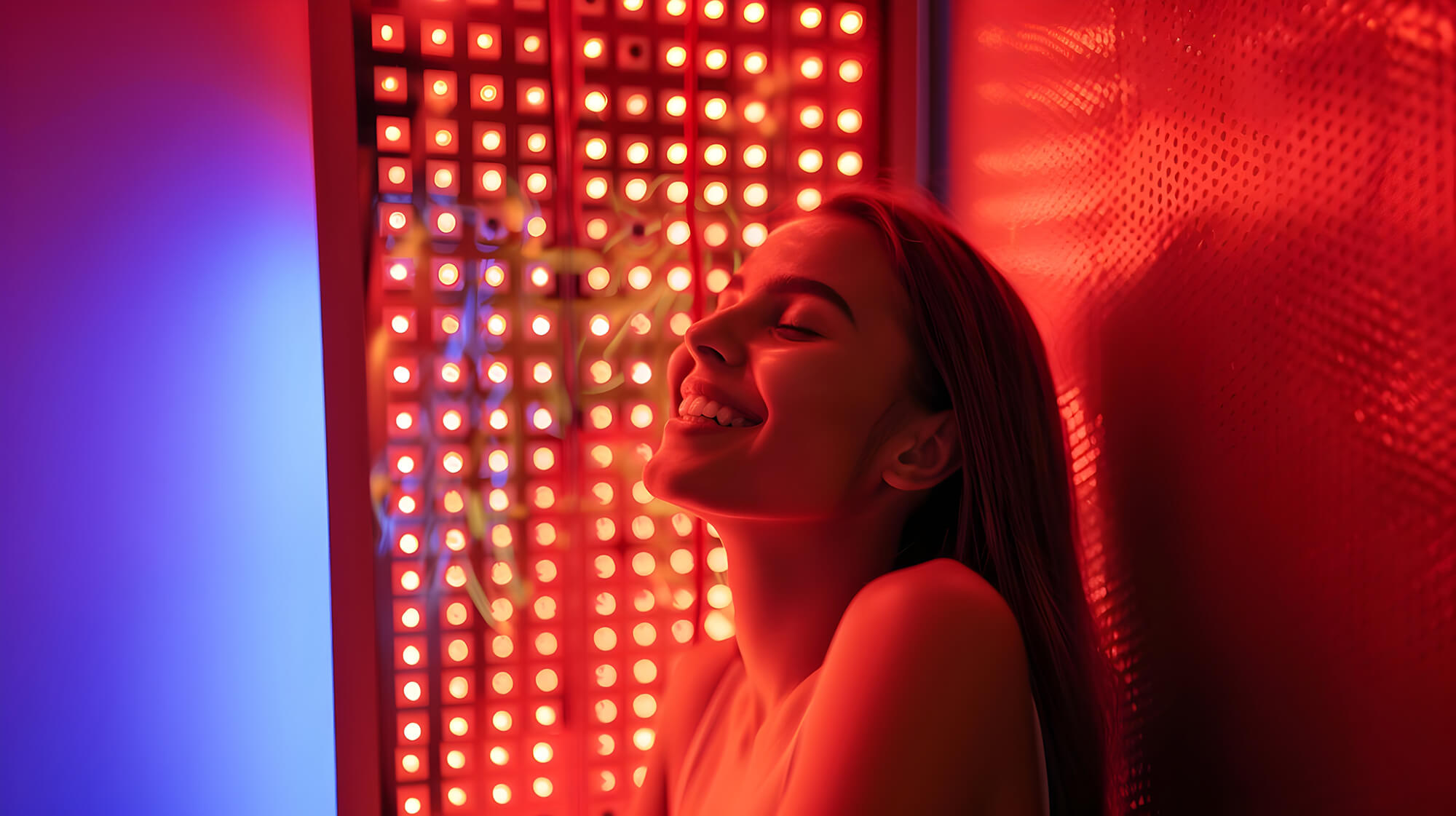
Red light therapy works best as a regular habit, not a one-off session or something to use as much as possible.
The question is not just how often you can use red light therapy. It is how often it makes sense to use it in a way that feels sustainable, useful, and easy to keep up with.
Red light therapy is often explained through the way red and near-infrared wavelengths interact with light-sensitive processes in the body, particularly around mitochondrial activity and cellular energy production. In simple terms, this helps explain why red light therapy is usually used consistently for recovery support, skin health, joint comfort and general wellbeing, rather than treated as a one-off reset.
This guide explains how often to use red light therapy, how many sessions per week usually makes sense, how long full body sessions last, and why consistency matters more than chasing daily use.
Quick answer
How often should you use red light therapy?
- A steady routine usually sits around 2–4 sessions per week
- Full body red light therapy sessions at Brysk last around 12–15 minutes
- Starting with 1–2 sessions per week can help you ease in
- Daily use is not usually needed; regular, well-spaced sessions are often easier to sustain
- Consistency over several weeks matters more than doing as much as possible
- Red light therapy is usually considered cumulative, meaning regular exposure over time matters more than one intense session
If you want a clearer breakdown – including what first-time use looks like and how routines tend to evolve – read on.
Jump to
At-a-Glance: A Typical Red Light Therapy Rhythm
If you just want a simple overview before diving into the detail, this is how red light therapy is most often used at Brysk.
Starting out
- 2–3 sessions per week
- Focus on getting used to the experience
- Sessions feel calm, easy, and repeatable
Building consistency
- 3–4 sessions per week
- Sessions slot naturally into routines
- No pressure to increase frequency
Longer-term use
- Frequency stays flexible
- Some weeks are lighter, others more regular
- The goal is sustainability, not optimisation
Below, we’ll break down what this looks like in practice, especially for first-time users.
How Many Times a Week Should You Use Red Light Therapy?
A sensible red light therapy routine usually sits around 2–4 sessions per week.
That range gives you enough regularity to build a habit without making the treatment feel difficult to maintain. Two sessions per week can work well as a gentle starting point. Three or four sessions per week may suit someone who wants red light therapy to become a more consistent part of their recovery or wellbeing routine.
The right rhythm should feel supportive, not disruptive or effortful.
Why Red Light Therapy Is Usually Used Consistently
Red light therapy is not normally treated as a one-off “feel different instantly” session.
The reason consistency matters is because red and near-infrared light are commonly understood to support cellular energy processes, including mitochondrial activity and ATP production. ATP is often described as the body’s cellular energy currency.
That mechanism helps explain why red light therapy is often used for recovery routines, skin support, joint comfort, and general wellbeing.
In practical terms, that can mean using red light therapy to support muscle recovery, calmer joints, skin quality, and the kind of steady recovery rhythm that is easier to maintain over several weeks.
The aim is not to force a dramatic response in one session. It is to give the body repeated, measured exposure that may support natural recovery processes over time.
That is why a few regular sessions per week usually makes more sense than occasional overuse or trying to make one session “stronger”.
What First-Time Use Usually Looks Like
First-time use should feel simple.
Rather than committing to a strict schedule straight away, early sessions are about getting familiar with the experience and seeing how it fits around real life.
That usually looks like:
- 1–2 sessions in the first week
- Sessions spaced comfortably rather than back-to-back
- Trying it before or after work, on rest days, or alongside other recovery sessions
At Brysk, there’s no expectation to follow a fixed plan from day one. Early sessions are about comfort, familiarity, and ease – not optimisation or commitment.
How Frequency Tends to Settle Over Time
Once red light therapy feels familiar, frequency usually becomes easier to judge.
A common rhythm is around three sessions per week: regular enough to feel consistent, without becoming something you need to plan your life around.
What that looks like in practice:
- Slightly higher use during busy or physically demanding periods
- Fewer sessions during quieter weeks
- Small adjustments based on how your body feels
What matters most isn’t hitting an exact number. It’s finding a rhythm that still feels realistic and easy to maintain over time.
Does Frequency Change Based on What You’re Using It For?
Frequency does not always need to change dramatically, but the reason someone uses red light therapy can influence how consistent they want to be.
For general wellbeing, a lighter weekly rhythm may be enough. Around training, joint comfort, skin health, or regular recovery, a more consistent 3–4 session pattern may be useful for several weeks before judging the effect.
Whether the goal is general wellbeing, recovery support, skin health, joint comfort, or simply a regular reset, the same principles tend to apply: short sessions, used consistently, without overthinking the schedule.
Higher weekly use may make sense during physically demanding periods, while quieter weeks may call for a lighter rhythm. Both approaches are valid – and both still sit within a sustainable range.
At Brysk, frequency is guided by how sessions feel and how easily they fit into routine, rather than chasing different schedules for different goals.
Red light therapy is offered as a wellbeing and recovery support session, not as a medical treatment or diagnostic service.
It should not be treated as a cure for pain, a replacement for medical advice, or a shortcut around sleep, movement, nutrition, or sensible recovery habits.
Can You Use Red Light Therapy Every Day?
You can use red light therapy frequently, but daily use is not usually necessary for a long-term routine.
A few sessions per week is often easier to maintain and gives you regular exposure without making the habit feel excessive.
More exposure is not always better because light dose still matters. Red light therapy is usually about giving the body enough useful exposure, then allowing time between sessions for the body to respond. Chasing daily use can make the routine harder to maintain without necessarily making it more effective.
At Brysk, the emphasis stays on consistency rather than intensity. If red light therapy starts to feel like something you have to squeeze in every day, reducing frequency may make the routine easier to sustain.
How Long Should a Full Body Red Light Therapy Session Last?
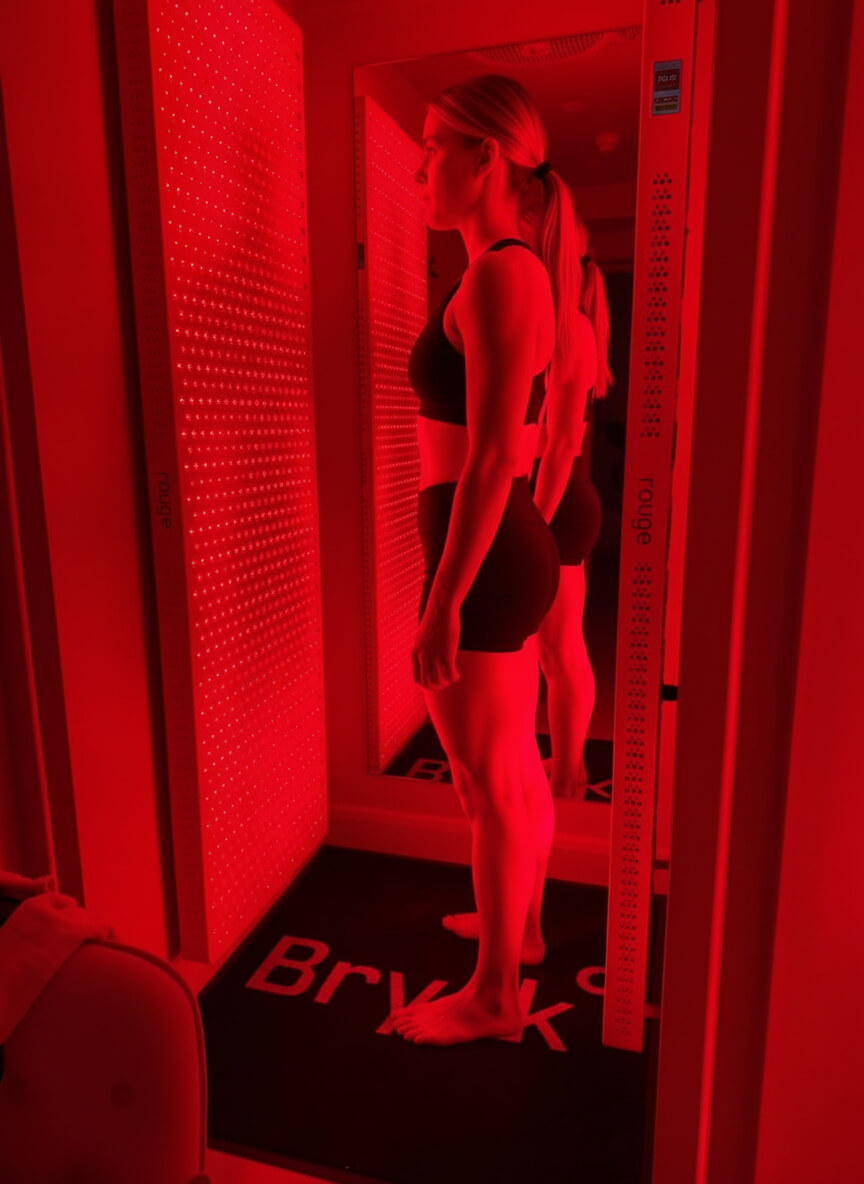
Full body red light therapy sessions are usually short. A whole body red light session in Manchester at Brysk lasts around 12–15 minutes.
Full-body panels also change the value of the session. Instead of using a small localised device on one area at a time, a full-body setup allows larger areas to receive exposure in one short appointment, which makes regular use much easier to fit into a week.
That is deliberate. The session is designed to be easy to fit into the day and simple to repeat consistently. With red light therapy, longer is not automatically better.
Red light therapy depends on dose, distance, wavelength, exposure time and consistency. A well-delivered full body session does not need to be stretched out just because it feels gentle. The aim is appropriate exposure, not maximum time under the panels.
The quality of the session, the equipment used, and the consistency of the routine matter more than trying to extend session time.
A short session used regularly is usually more realistic than occasional longer sessions that are harder to maintain.
Short Sessions vs Fewer Longer Ones
When it comes to red light therapy, session quality matters more than session length.
| Approach | How it usually feels |
|---|---|
| Short, regular sessions | Easy to repeat, fits into routine, sustainable long term |
| Longer, infrequent sessions | Harder to schedule, easier to skip, not automatically more effective |
That’s why sessions at Brysk are designed to feel manageable and unhurried – something you can return to consistently, rather than something you need to maximise in one go.
Not sure how often would work for you?
If you’d rather talk things through before booking, the Brysk team are happy to help you think about frequency – whether you’re brand new or looking to build something that fits around other sessions.
No pressure. No obligation.
How Red Light Therapy Fits Into a Routine at Brysk
Red light therapy tends to fit into Brysk routines in a few common ways:
- As a regular wellbeing session during busy or stressful periods
- Alongside training or exercise as part of a recovery routine
- On rest days, as something supportive but gentle
- As a standalone session focused on calm and consistency
- As part of a wider recovery stack alongside cryotherapy, compression boots, lymphatic drainage or HBOT
Some clients use it year-round. Others dip in and out depending on training load, stress, routine, or how life feels at the time. There’s no fixed schedule and no expectation to “keep up”.
If you are still deciding whether the treatment itself makes sense for you, our guide to whether red light therapy is worth it explains how to think about value, consistency, and realistic expectations.
FAQs
Before booking, most people have a few practical questions about frequency. These are the ones we hear most often.
How many times a week should I use red light therapy?
A steady routine usually sits around 2–4 sessions per week. If you are new to red light therapy, starting with fewer sessions can make it easier to build consistency.
Is 12–15 minutes enough?
Yes. Full body red light therapy sessions are designed to be short, comfortable, and easy to repeat consistently. Longer sessions are not automatically more effective.
Can I overuse red light therapy?
Using it far more often than needed usually doesn’t add benefit. If sessions start to feel excessive or hard to maintain, reducing frequency is usually the better option.
How long does it take to notice a difference?
Some clients notice subtle changes within a few weeks, while others notice benefits more gradually. Responses vary, and consistency over time matters more than speed.
Is red light therapy suitable if I’ve never tried anything like this before?
Yes. Many people start with red light therapy because it feels calm, non-invasive, and easy to repeat. First-time sessions are guided carefully, and there’s no pressure to commit to a set routine.
Is red light therapy once a week enough?
Once a week can be a useful starting point, especially if you are new to red light therapy. For a more consistent routine, 2–4 sessions per week is usually a better long-term rhythm.
How often should you do full body red light therapy?
Full body red light therapy is often used 2–4 times per week. At Brysk, frequency stays flexible so sessions can fit around your routine, recovery needs, and how your body responds.
Thinking About Your First Session?
If you’re still unsure, that’s completely normal. Most first-time visitors arrive with questions rather than expectations – and that’s exactly how red light therapy at Brysk is designed to be approached.
A short conversation is often all it takes to decide whether a session feels right for you.
For people who want red light therapy to become part of a regular recovery routine, Brysk memberships can make consistency easier because sessions are managed through core service credits rather than one-off bookings each time.
Want a bit of guidance before you start?
Book a session or speak to the team if you’d like help choosing what feels right.