Cryotherapy is considered safe for most healthy adults when sessions are short, supervised, and delivered using proper screening and protective protocols.
Most safety concerns don’t come from the cold itself, but from how sessions are managed.
Supervision, session length, suitability checks, and clear communication play a far bigger role in whether cryotherapy feels controlled and supportive, or uncomfortable and poorly handled.
At Brysk, safety is built into how sessions are delivered from start to finish. This guide explains what responsible cryotherapy delivery looks like, who it may not be suitable for, and what you should expect before booking your first session.
Quick answer
Is cryotherapy safe?
Cryotherapy is considered safe for most healthy adults when:
- Sessions are short and guided by surface skin temperature
- You’re provided with appropriate protective gear, and checks are carried out before entering the chamber
- You’re supervised throughout, with the ability to stop at any time
- Suitability is assessed before your first visit
- You’re not pushed to “tough it out”
It isn’t suitable for everyone, and a responsible studio should be comfortable saying when it’s not the right fit.
If you want the detail behind that answer – including common concerns, warning signs, and what responsible providers actually do differently – read on.
Jump to
Why Do People Ask If Cryotherapy Is Safe?
Cryotherapy often looks extreme. Stepping into a chamber filled with very cold air naturally raises questions – especially if you’re new to recovery therapies.
Safety concerns usually come from a few places:
- Seeing dramatic headlines or isolated incidents online
- Confusion between medical cryotherapy and wellness-based cryotherapy
- Studios advertising extreme temperatures or “pushing limits”
- A lack of clear explanation around how sessions are managed
It’s completely reasonable to ask whether something unfamiliar is safe. The important thing is understanding what actually affects safety, rather than relying on worst-case examples.
What Actually Makes Cryotherapy Safe (or Unsafe)
Cryotherapy safety has very little to do with toughness or tolerance. What matters most is how the session is delivered, who’s supervising, and whether individual suitability is taken seriously. One of the most important factors is monitoring surface skin temperature, which indicates how your body is responding and determines how long a session actually needs to last.
Here’s what genuinely separates safe cryotherapy from risky practice:
What safe cryotherapy looks like vs what causes problems
| Factor | Safe, Responsible Delivery | Higher-Risk or Poor Practice |
|---|---|---|
| Session length | Guided by surface skin temperature, typically around 3 minutes | Fixed or extended time limits used regardless of how the body responds |
| Supervision | Staff present throughout with constant visual and verbal check-ins | Left alone or minimally monitored once the session starts |
| Ability to stop | Clear instructions and the option to pause or stop immediately at any point | Pressure to continue or unclear exit guidance |
| Screening beforehand | Proper assessment of health history, comfort levels, and suitability | Little to no screening before the first session |
| Protective gear & preparation | Correct protective gear provided, fitted, and checked before entry, with jewellery removed | Inadequate or missing protective gear, or jewellery left on |
| Equipment & setup | Well-maintained chambers, dry conditions, and correct setup | Poorly maintained equipment or rushed setup |
| Communication | Clear explanation of what to expect before and during the session | Minimal guidance or reliance on “just see how it goes” |
| Overall approach | Guided, individualised, and safety-first | One-size-fits-all or performance-driven |
Cryotherapy works best when it’s controlled, calm, and responsive – not extreme.
Being informed, supported, and able to stop at any point plays a real role in keeping the experience safe.
What If You Feel Nervous During Your First Cryotherapy Session?
Feeling unsure before your first cryotherapy session is completely normal. For most people, the intensity is psychological rather than physical – the cold feels unfamiliar, not harmful.
That’s why first sessions should always be guided at a slower pace, with clear communication throughout.
You’re checked in on throughout, and the session can be paused or stopped at any point. There’s no expectation to “push through” discomfort.
A well-run cryotherapy session adapts to how you respond, not the other way around. Feeling in control is part of what keeps the experience safe.
Sessions are adjusted gradually, with changes made step by step rather than all at once.
Is Cryotherapy Safe for Everyone?
No – and that’s a good thing.
Cryotherapy isn’t designed to be universal. Some people may be advised not to use it, or to seek medical guidance first.
This can include people with:
- Certain circulation or cardiovascular conditions
- Strong sensitivity to cold
- Specific nerve or sensory issues
- Pregnancy
- Severe claustrophobia
This is why a proper medical screening form and open conversation before your first session are essential parts of safe delivery.
A responsible studio will always prioritise suitability over sales. Being told “this may not be right for you” is a sign of good practice, not a red flag.
What Are the Possible Side Effects of Cryotherapy?
When delivered correctly, side effects from whole body cryotherapy are uncommon. However, temporary reactions can include:
- Redness of the skin
- Mild tingling or numbness during rewarming
- Temporary sensitivity in exposed areas
More serious issues are typically linked to poor supervision, missing protective gear, or excessive exposure time rather than properly delivered sessions. This is why structured monitoring and clear stop points matter.
When Should You Not Use Cryotherapy?
Cryotherapy may not be suitable if you have certain medical conditions or sensitivities. You should avoid or postpone sessions if you have:
- Uncontrolled cardiovascular conditions
- Severe cold intolerance or cold-induced conditions
- Active infection, fever, or acute illness
- Recent surgery without medical clearance
- Pregnancy without prior medical guidance
If you’re unsure about suitability, speak with your GP and contact the Brysk team before booking. Responsible cryotherapy always starts with screening and honest conversation.
Not sure if cryotherapy is right for you?
If you’d rather talk things through before booking, message the Brysk team directly and ask anything – from suitability to what your first session would feel like. No pressure. No obligation.
Safe vs Suitable: Why Those Aren’t the Same Thing
Something can be safe in general without being appropriate for everyone at every moment.
Cryotherapy is considered safe when delivered correctly – but suitability depends on individual factors like health history, comfort with cold exposure, and personal goals.
That’s why screening matters.
Being advised to delay or avoid cryotherapy isn’t a failure or a risk signal. It’s a sign that the studio is prioritising long-term wellbeing over short-term bookings.
Can Cryotherapy Go Wrong?
Like any physical intervention, cryotherapy can cause issues if delivery protocols aren’t followed.
In many reported cases, issues arise when sessions are time-led rather than guided by skin temperature, or when people are left unsupervised.
When problems do occur, they’re usually linked to:
- Sessions lasting too long
- Inadequate supervision
- Poor screening
- Incorrect or missing protective gear
- People using cryotherapy despite clear contraindications
These situations are uncommon in properly run environments, but they highlight why delivery matters more than temperature claims or marketing language.
How Cryotherapy Is Delivered Safely at Brysk
At Brysk, cryotherapy is delivered as a guided, controlled process – not a challenge to push through.
Whole body cryotherapy has been used in sports recovery settings for decades, and published research has examined both its physiological effects and safety profile when delivered under controlled conditions. Manufacturer guidance typically recommends sessions of around three minutes to balance effectiveness and safety.
Every session follows the same safety-first framework:
- Fully supervised from entry to exit
- Guided by surface skin temperature, not fixed time limits
- Adjusted gradually based on how your body responds
- Clear communication throughout, with the ability to stop at any point
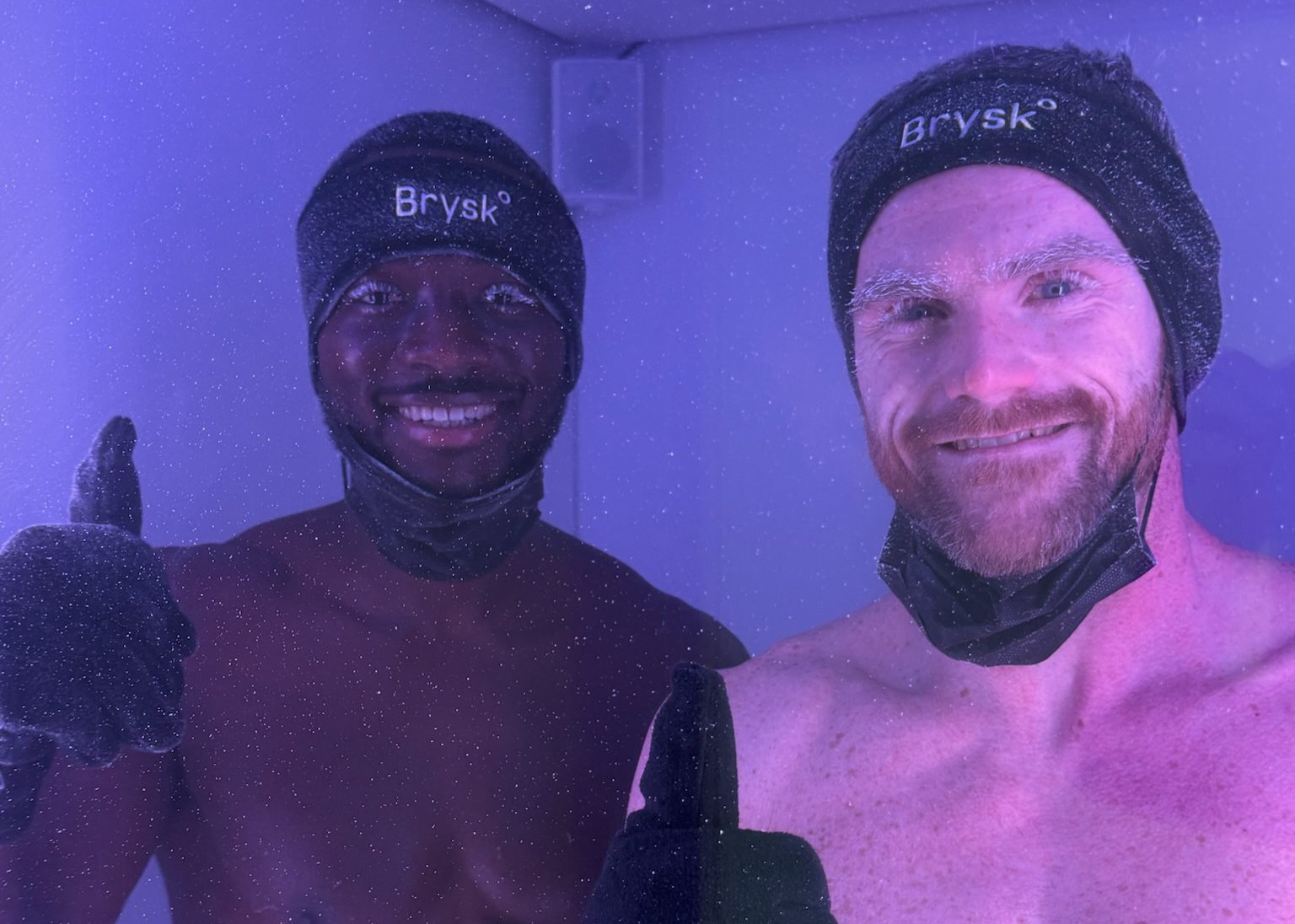
Before entering our cryo chamber in Manchester, clients complete a medical screening form, are provided with appropriate protective gear, and are talked through exactly what to expect.
First sessions are handled differently to repeat visits, with additional explanation and check-ins. If something doesn’t feel right, sessions are paused or stopped – no pressure, no pushing.
In some cases, we’ll recommend not proceeding. That decision is always made with long-term wellbeing in mind.

Behind the Sessions at Brysk
Cryotherapy at Brysk is delivered by a trained, hands-on team with experience guiding first-time and repeat clients through recovery treatments safely and confidently.
Every session is supervised, adjusted in real time, and run with clear stop points – not fixed protocols or one-size-fits-all timings. If something doesn’t feel right, sessions are paused or stopped. No pressure.
That approach is intentional. Brysk was built as a Wellness and Recovery Studio, where safety, guidance, and long-term wellbeing shape every decision.
Curious how this feels in practice?
Book a session or speak to the team if you’d like guidance before starting.
Common Cryotherapy Safety Questions
If you’re considering cryotherapy for the first time, it’s normal to have practical questions about comfort, aftercare, and how sessions are managed. Below are clear, straightforward answers to the things people ask us most often before booking.
Is cryotherapy painful?
Cryotherapy can feel intense, especially at first, but it shouldn’t be painful. Most people describe it as cold and stimulating rather than uncomfortable.
Can cryotherapy cause burns or skin damage?
Skin issues are associated with poor delivery – such as excessive exposure, missing protective gear, or inadequate supervision – rather than with properly delivered cryotherapy sessions. Problems are more often linked to excessive exposure or poor technique.
Monitoring skin temperature and using correct protective gear significantly reduces this risk.
How long is a safe cryotherapy session?
Sessions are typically around 3 minutes, which aligns with manufacturer guidance and current research. Time alone isn’t the deciding factor – sessions are guided by surface skin temperature, and extending exposure beyond the optimal response does not add benefit.
What should you avoid after cryotherapy?
It’s usually best to let your body return to its normal temperature gradually and stay well hydrated. Your team should explain any specific aftercare guidance.
How often can you do cryotherapy safely?
Frequency varies by individual and goals. Some people use it occasionally, others as part of a routine – always with guidance.
So – Is Cryotherapy Safe?
For most people, cryotherapy is a well-tolerated, carefully managed experience when sessions are short, supervised, and delivered responsibly.
At Brysk, cryotherapy sessions in our Manchester studio are approached as guided experiences – whether you’re booking whole body cryotherapy or localised cryo for targeted recovery. No pressure, no extremes, and no assumptions about what you “should” tolerate.
If you’re unsure whether cryotherapy is right for you, the safest next step is a conversation – not a commitment. Our team is always happy to talk through suitability, answer questions, and help you decide what makes sense for your body and goals – reach out online.