
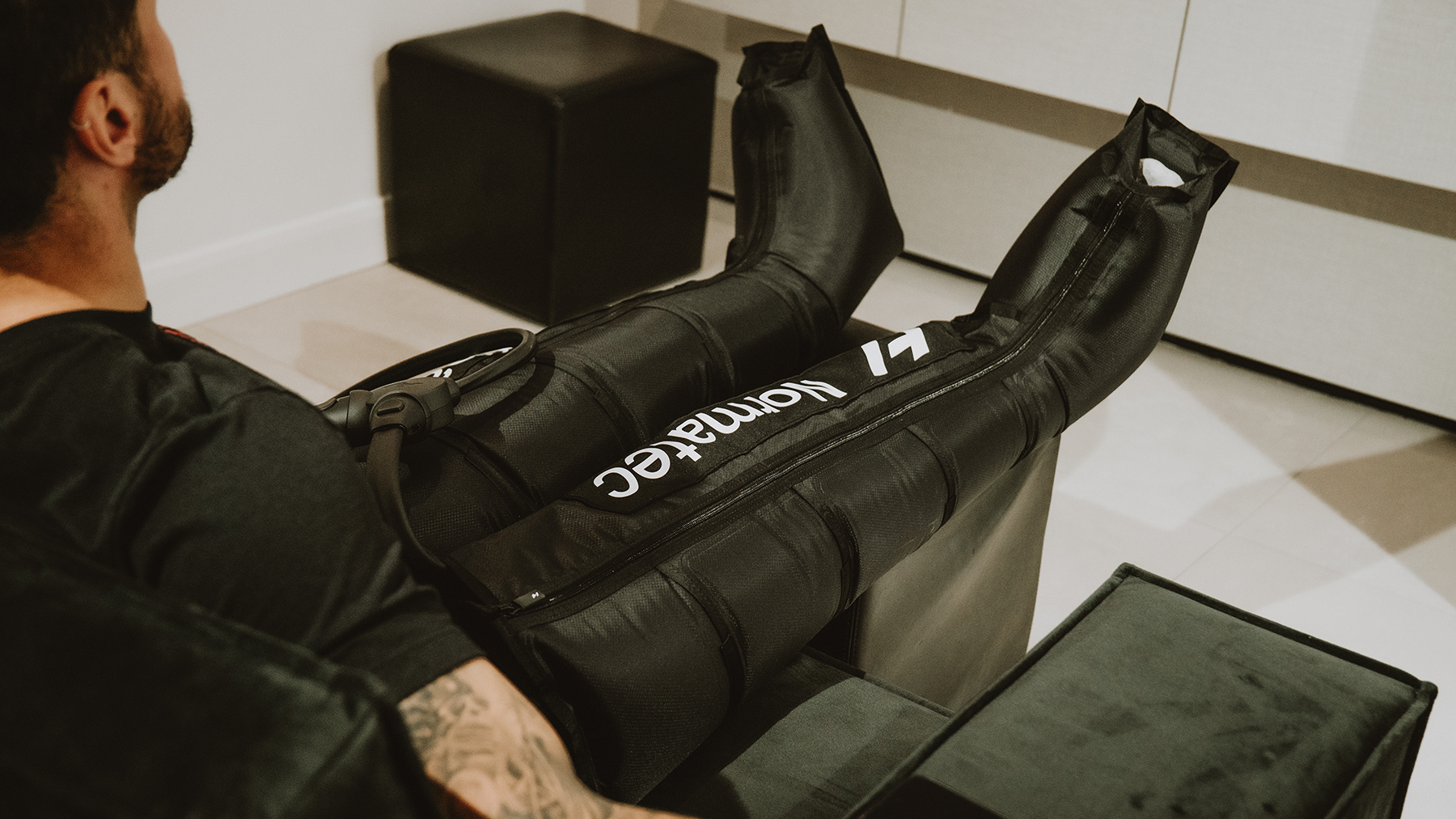
Compression boots are often described as a recovery tool – but that doesn’t answer the question most people have before trying them.
- What do they actually feel like on your body?
- Is the pressure uncomfortable?
- And does it feel more like something you endure… or something you relax into?
For most people, the surprise is how structured and manageable the sensation feels. Compression boots don’t hurt, don’t trap you, and don’t demand effort. The feeling is firm but controlled, rhythmic rather than intense, and easier to settle into than many people expect.
During a session, you’re seated comfortably with your legs inside the boots, and everything happens through air pressure alone – there’s no movement required from you at any point.
This guide focuses purely on the experience – so you know what compression boot therapy feels like before deciding whether they’re right for you.
Quick answer
What Do Compression Boots Feel Like?
Most people describe compression boots as:
- A firm but comfortable squeeze around the legs
- Pressure that moves, rather than staying in one place
- A clear inflate–release rhythm that becomes predictable quickly
- Initially noticeable, then surprisingly relaxing
- Leaving legs feeling lighter and easier to move.
If you want the detail behind that – read on.
Jump to
2. How the rhythm changes how it feels
3. Does it hurt or feel too intense?
4. Relaxing or stimulating? Usually both – in that order
5. What your legs usually feel like afterwards
6. First-time expectations vs reality
7. Is it comfortable if you’ve never tried anything like this?
8. FAQs: What People Usually Ask Before Their First Session
9. Thinking about trying compression boots?
The Main Sensation: Firm, Moving Pressure
The defining feature of compression boots is movement.
Rather than squeezing one area and holding it, the pressure travels up the legs in waves. You feel one section gently inflate, then release, before the sensation progresses upward and resets.
People often describe it as:
- A controlled “hug” around the calves and thighs
- Pressure that feels purposeful rather than restrictive
- A sensation that’s noticeable, but not sharp or aggressive
Because the pressure isn’t constant, your body doesn’t brace against it. Instead, it tends to adapt quickly.
How the Rhythm Changes How It Feels
The first few cycles usually feel deliberate – you notice the pressure, the movement, the sequence.
Then something shifts.
Once the inflate–release rhythm repeats a few times, your body stops reacting to each squeeze individually. The pattern becomes familiar. Predictable. Almost background.
Some people stay aware of the pressure moving up the legs. Others stop paying attention entirely – scrolling, breathing more slowly, or closing their eyes without realising they’ve done it.
That rhythm is what changes the experience from unusual to comfortable. When nothing surprises your body, it stops bracing – and that’s when the session starts to feel genuinely easy to settle into.
Does It Hurt or Feel Too Intense?
For the vast majority of people: no.
Compression boots are designed to feel firm, not painful. There’s no sharp pressure, no pulling, and no sensation that builds into discomfort.
If you’re worried it might feel “too much,” you’re not alone – and this is where expectations often miss the mark. First-timers regularly say the pressure feels far more manageable than they imagined.
The experience should feel:
- Supportive, not overwhelming
- Controlled, not claustrophobic
- Adjustable, not fixed
If something doesn’t feel right, pressure can be reduced or stopped. There’s no expectation to tolerate discomfort.
Not sure if compression boots are right for you?
If you’d rather talk things through before booking, the Brysk team are happy to answer questions — from what the pressure actually feels like to whether it fits how you’re feeling right now.
No pressure. No obligation.
Relaxing or Stimulating? Usually Both – in That Order
At the start, compression boots feel active.
- You notice the squeeze.
- You notice the movement
- Then the rhythm takes over.
As the cycles repeat, breathing slows, muscles soften, and the sensation fades from the foreground.
What begins as stimulation gradually becomes relaxation – without tipping into grogginess or fatigue.
That balance is why compression boots sit in a useful middle ground: noticeable enough to feel effective, calm enough to fully unwind.
Compared to other recovery sessions, compression boots sit in the middle. They’re more noticeable than lymphatic drainage, which is slower and gentler, but far less intense than deep manual massage.
Unlike red light therapy, which is entirely passive, compression gives you a clear physical sensation – without asking anything of you.
What Your Legs Usually Feel Like Afterwards
When the pressure stops, it doesn’t feel like something has been “done to” your legs.
Instead, people commonly notice:
- A feeling of lightness
- Reduced tightness or heaviness
- Legs that feel looser and easier to move
- A relaxed body without feeling wiped out
There’s no soreness and no recovery period. Most people feel normal – just a little more settled than before.
First-Time Expectations vs Reality
For many people, compression boots feel very different to what they expect.
| What people often expect | What it usually feels like |
|---|---|
| Tight, restrictive pressure | Firm but controlled |
| Something painful or intense | Rhythmic and manageable |
| Needing to brace or endure | Easy to relax into |
| Feeling drained afterwards | Feeling lighter and refreshed |
That gap between expectation and reality is why first experiences are often more reassuring than anticipated.
Is It Comfortable If You’ve Never Tried Anything Like This?
Yes – and many people choose compression boots because they’re approachable.
There’s:
- No manual pressure from a therapist
- No stretching or manipulation
- No need to “push through” sensation
If you’re new to recovery or wellbeing treatments, compression boots often feel less intimidating than imagined. Most first-timers describe the experience as odd for the first minute, then genuinely comfortable once the rhythm settles.
FAQs: What People Usually Ask Before Their First Session
Before booking, most people have a few quick questions.
These are the ones we hear most often from first-timers – especially around comfort, pressure, and what the session actually feels like.
Do compression boots cut off circulation?
No. The pressure inflates and releases in cycles, which is what keeps the sensation comfortable. It doesn’t stay locked in one place, which helps keep the sensation comfortable throughout.
Can you relax during a compression boots session?
Yes. Many people read, listen to music, or close their eyes once the rhythm settles. It usually feels active at first, then increasingly easy to relax into.
Do compression boots feel the same the whole time?
The pressure cycles repeat, but most people stop actively noticing the sensation after a few minutes. As your body adapts to the rhythm, it tends to fade into the background.
Compression boots at Brysk are offered as a wellbeing and recovery support session, not as a medical treatment.

Thinking About Trying Compression Boots?
If you’re curious but unsure, that’s completely normal. Most people don’t know what compression boots feel like until they experience them – and a short conversation is often enough to decide whether they sound like a good fit for you.
At Brysk, compression boots therapy in Manchester is guided, adjustable, and designed to feel calm rather than intense – especially for first-timers. If you want to understand session pricing, or whether memberships make sense for building compression into a regular routine, the team are happy to talk it through.
And if compression boots aren’t right for you? That’s treated as a sensible outcome, not something to force.
Curious how this feels in practice?
Book a session or speak to the team if you’d like guidance before starting.