

Hyperbaric Oxygen Therapy often sounds more intimidating on paper than it feels in real life.
For most people, the hesitation comes from the unknown. They’ve heard about pressure, oxygen, chambers, and long sessions – but very little about how the session actually feels once you’re inside.
That uncertainty is normal. HBOT occupies a middle ground – more structured than most wellness treatments, but far removed from anything invasive or clinical when delivered properly.
At Brysk, HBOT is approached as a guided, calm, and closely monitored recovery session – shaped by the same principles that run through everything we do as a wellness and recovery studio. Knowing what happens before you arrive, what you’ll feel inside the chamber, and how people typically feel afterwards makes a real difference to confidence and comfort.
Quick answer
What to Expect From a Hyperbaric Oxygen Session
- You relax inside a pressurised hyperbaric chamber for around 60–90 minutes, breathing oxygen-rich air throughout
- As pressure increases, you may notice gentle ear popping, similar to flying – this settles once pressure stabilises
- During the session, most people feel calm and deeply relaxed, often reading, listening to music, or resting
- Afterwards, it’s common to feel clear-headed and refreshed, with no downtime required
If you’re curious how this feels in practice, you can explore Hyperbaric Oxygen Therapy at Brysk and see whether it fits your recovery or performance goals.
This guide walks you through exactly that – step by step – so you know what to expect before booking, not halfway through your first session.
Jump to
At-a-Glance: What a Hyperbaric Oxygen Session Is Like
If you just want a clear overview before diving into the detail, this is what a typical HBOT session at Brysk looks like from start to finish:
Before
- You’re welcomed and talked through the session
- Suitability is checked and any questions are answered
- Preparation is calm, unhurried, and clearly explained
During
- Gradual pressurisation with guidance throughout
- Around 60 minutes breathing enriched oxygen
- A calm, comfortable environment with constant supervision
After
- Gentle decompression
- No downtime or recovery period
- Most people leave feeling clear-headed or refreshed
Most first-time clients come in with questions rather than expectations – and that’s exactly how sessions are designed to be approached.
Below, we break each stage down in more detail so you know exactly how the experience feels – especially if it’s your first session.
Watch: What a hyperbaric oxygen session feels like
MCR Wellness visits Brysk to try the hyperbaric oxygen chamber and shares what the session felt like from a first-timer’s perspective.
Why Medical Descriptions Don’t Reflect Studio Sessions
Most information about Hyperbaric Oxygen Therapy online is written for clinical or hospital use.
Many descriptions of HBOT are designed to support:
- Wound care and trauma treatment
- Medically prescribed protocols
- Longer treatment plans under clinical supervision
- Patients who may already be injured or unwell
That clinical context influences how HBOT is usually described – and why it can feel more intense than most people expect.
How Studio-Based HBOT Differs
Studio-based hyperbaric sessions are delivered in a very different setting.
- The environment is calm and non-clinical
- Sessions are designed around comfort and guidance
- Communication is clear throughout
- The experience is repeatable, not urgent
At Brysk, HBOT sessions are delivered in a controlled studio environment with hands-on supervision.
You’re guided through each stage, monitored throughout, and never left unsure about what’s happening or how you should be feeling.
That’s why relying on medical descriptions alone can make HBOT sound more daunting than it feels in practice – particularly for first-time visitors.
What Happens When You Arrive
When you arrive at Brysk, the focus is on easing you into the session rather than rushing you straight into the chamber.
You’ll be welcomed by a member of the team who explains how the session works, checks how you’re feeling, and answers any questions before anything begins. Nothing moves forward unless you’re comfortable and clear on what to expect.
About the chamber
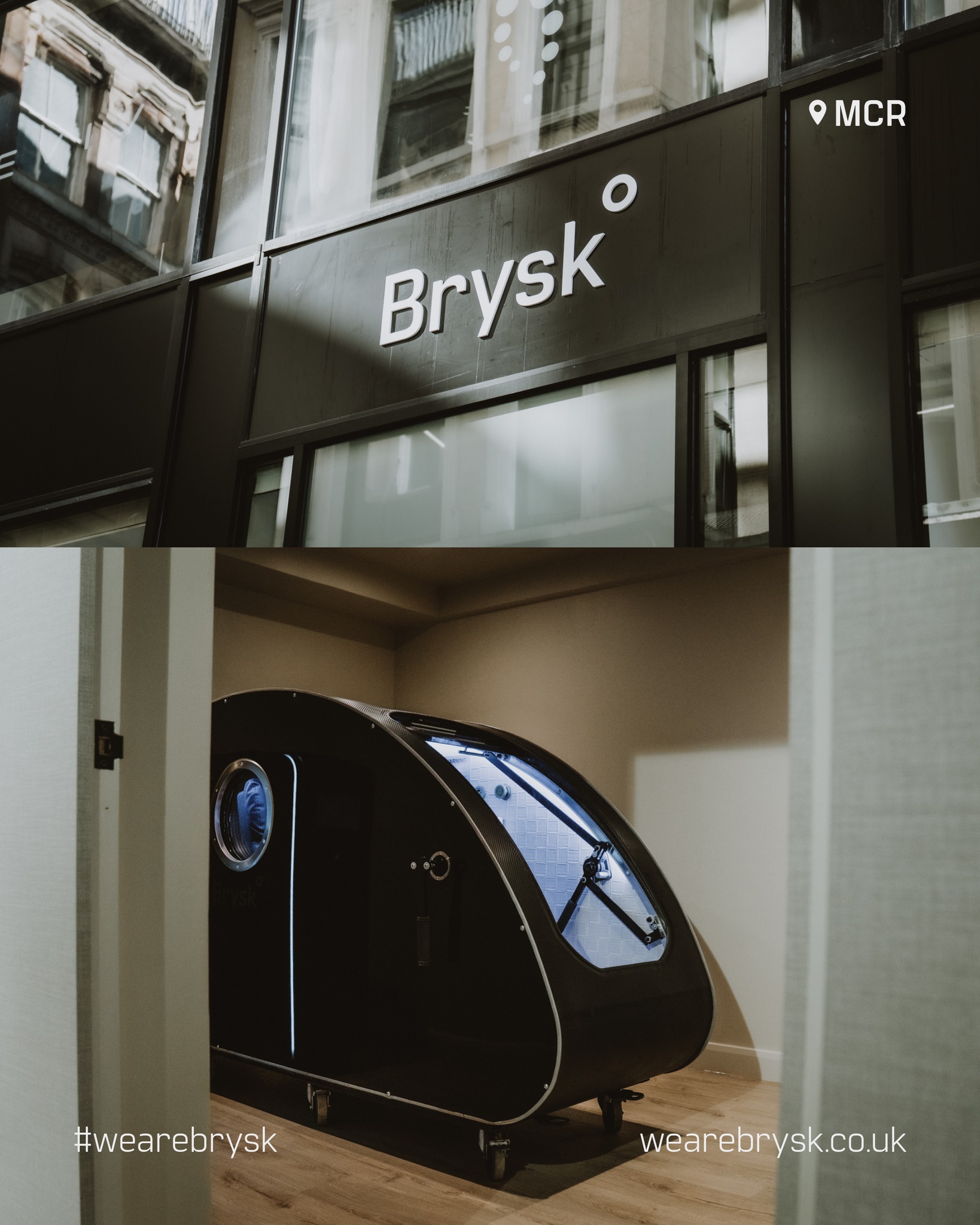
Brysk uses a Winslet hyperbaric chamber, chosen for its comfort, controlled pressurisation, and suitability for guided studio sessions. It allows constant supervision and easy communication throughout, helping the experience feel calm and predictable rather than clinical.
Before entering the chamber, a few simple suitability checks take place and you’ll be guided through preparation – such as comfortable clothing, hydration, and removing items that aren’t suitable for a pressurised oxygen environment.
Once you’re ready, the chamber is prepared and checked, and you’re shown exactly how to enter, lie back comfortably, and communicate throughout the session. There’s no pressure to hurry, and plenty of time to pause, adjust, or clarify anything before pressurisation begins.
For most people, this arrival and preparation stage removes the majority of first-time nerves. By the time the session starts, it feels structured, calm, and fully supported rather than unfamiliar or intimidating.
What Pressurisation Feels Like (Ears, Sensations)
Pressurisation is usually the part people worry about most – and in practice, it’s far less dramatic than expected.
As the chamber begins to pressurise, sensations tend to build gradually, not suddenly. Most people notice:
- Pressure in the ears, similar to take-off or landing on a flight
- A mild sense of fullness or warmth as pressure increases
- Very little sensation beyond this once pressure stabilises
You’re guided throughout on simple ways to equalise pressure, such as:
- Swallowing or yawning
- Gently moving your jaw
- Taking your time – there’s no rush
If your ears need longer to adjust, pressurisation can be slowed, paused, or adjusted at any point.
Once full pressure is reached, these sensations usually fade. For most people, this is when the session shifts from “something happening” to something you barely notice at all.
Throughout pressurisation, you’re monitored continuously and able to communicate at any time. If something doesn’t feel right, the process can be stopped or reversed immediately.
For first-time clients, this stage often turns out to be the least challenging part of the session – especially when they know exactly what to expect and that nothing is forced.
What the Session Itself Is Like
Once pressurisation is complete, the session settles into a steady, predictable rhythm.
You’ll be lying comfortably inside the chamber, breathing normally while oxygen-rich air circulates around you. There’s nothing you need to actively manage – no masks, no techniques, no instructions to follow. Most people simply relax and let the session run.
Many clients pass the time reading, listening to music or a podcast, or resting quietly. Some drift in and out of sleep. Others use the time to fully switch off, particularly if they’re coming in from a busy or mentally demanding day.
The chamber environment feels calm and contained without being rushed or overwhelming. Because pressure and oxygen levels remain stable, the sensations you noticed during pressurisation don’t continue throughout the session.
Throughout the entire time, you’re monitored and able to communicate if you need anything. You’re never left unsupported, and there’s always the option to pause or end the session if required.
For most people, this is the point where HBOT stops feeling unfamiliar and starts feeling genuinely restorative.
Not sure if HBOT is right for you?
If you’d rather talk things through before booking, the Brysk team are happy to answer questions – from suitability to what your first session would actually feel like.
Time Inside vs Total Appointment
One point that can cause confusion is the difference between time spent inside the chamber and the total appointment length.
1. Time inside the chamber
This refers to the period where the chamber is fully pressurised and you’re breathing air with increased oxygen content. For most sessions, this lasts around 60 minutes and is the central part of the experience.
2. Pressurisation and decompression
Before and after that core period, pressure is increased and decreased gradually. These stages are unhurried and deliberate, giving your body time to adjust comfortably rather than rushing changes in pressure.
3. Total appointment time
When pressurisation, decompression, a short check-in beforehand, and guidance afterwards are included, the full appointment may be listed as around 90 minutes.
The additional time exists purely to deliver the session safely, calmly, and consistently.
Knowing this upfront helps set expectations and avoids the assumption that the session is longer or more demanding than it actually feels.
If you’re comparing sessions or planning ongoing use, you can also view current HBOT pricing and memberships before booking.
What People Usually Feel Afterwards
Coming out of the chamber, most people are surprised by how normal they feel – just clearer, lighter, or more refreshed.
There’s no recovery period and no need to wait around. You can get changed and carry on with your day as usual. No downtime, no grogginess. You’re straight back to the office, the gym, or the school run feeling noticeably more balanced.
Commonly Reported Feelings After a Session Include:
- Clearer thinking or calm mental focus
- Improved energy without feeling wired
- Reduced physical heaviness or tension
- A general sense of being more “reset” or balanced
Not everyone notices something dramatic straight away, and that’s completely normal. For some, the effects show up more subtly – better sleep that night, steadier energy the next day, or smoother recovery over the following 24–48 hours.
HBOT isn’t designed to create an intense, instant sensation. Its benefits tend to build gradually, especially when sessions are used consistently as part of a wider recovery or performance routine.
Safety, Supervision, and Stopping at Any Point
Safety during a hyperbaric session isn’t treated as a separate consideration – it shapes how the session is run from start to finish.
Sessions at Brysk are supervised throughout, with clear communication and full control at every stage.
In Practical Terms, This Means:
| During your session | What it means for you |
|---|---|
| Pressurisation is gradual | Changes in pressure are unhurried and adjusted to your comfort |
| Sessions can be paused | If something feels off, the session can be slowed or stopped immediately |
| Constant supervision | You’re monitored the entire time, not left alone |
| Open communication | You can speak, ask questions, or signal at any point |
| No pressure to continue | You’re never expected to “push through” discomfort |
Nothing about the session is forced. If something doesn’t feel right – at any stage – it can be adjusted or stopped entirely.
That level of oversight is what helps the experience feel calm and controlled, rather than stressful or overwhelming.
Knowing you’re supported , observed, and in control removes much of the anxiety people associate with enclosed or pressurised environments. For most clients, that reassurance fades into the background quickly – but it’s always there if needed
Who It May Not Be Suitable For
Hyperbaric Oxygen Therapy is well tolerated by most people, but it isn’t suitable for everyone – and it’s important to be upfront about that.
HBOT may not be appropriate if you have certain medical considerations or recent procedures, such as untreated lung conditions, recent ear or sinus surgery, or specific respiratory infections. People with significant claustrophobia may also want a conversation first to decide whether the environment feels right for them.
This doesn’t automatically rule anyone out. In many cases, it simply means talking things through, adjusting expectations, or choosing a different recovery option that’s better suited to how you feel right now.
At Brysk, suitability is checked before sessions begin, and recommendations are based on comfort and safety – not pressure to book or proceed. If HBOT isn’t the right fit, that’s treated as a sensible outcome, not a failure.
HBOT is offered as a wellness and recovery support service and does not diagnose, treat, or replace medical care.
Being clear about suitability upfront is part of making the experience feel supportive, predictable, and reassuring.
How People Use HBOT at Brysk
Many people find HBOT most useful as part of an ongoing routine rather than a one-off session. It’s usually part of a wider recovery or performance routine, shaped around real-life demands rather than fixed protocols.
Common Ways People Use HBOT at Brysk
- During intense training blocks to support recovery and reduce fatigue
- Through busy or mentally demanding work periods to maintain focus and energy
- Once or twice a week as part of an ongoing wellbeing or performance routine
- Alongside other treatments such as red light therapy, compression boots, or cryotherapy
There’s no fixed formula. Sessions are used flexibly and adjusted to fit how someone feels and what they’re working towards – not forced into rigid schedules.
If you’re considering your first session, most people leave feeling calmer than expected and clearer about whether it’s something they want to continue with. If you’d like to see how hyperbaric oxygen therapy in Manchester is delivered at Brysk, you can explore the service here or speak to the team before booking.
Curious how this fits into your routine?
Book a session or speak to the team if you’d like guidance before starting.
FAQs
Before booking, most people have a few practical questions. Here are the ones we’re asked most often about Hyperbaric Oxygen Therapy.
How long is a hyperbaric oxygen session?
Most sessions involve around 60 minutes inside the pressurised chamber. Total appointment time is longer to allow for gradual pressurisation, decompression, and guidance before and after the session.
Does hyperbaric oxygen therapy hurt?
No. Most people find sessions comfortable and relaxing. The main sensation is mild pressure in the ears during pressurisation, similar to flying, which settles once pressure stabilises.
What should I wear to a HBOT session?
Comfortable, casual clothing is best. You’ll be guided on anything that needs to be removed before entering the chamber to keep the environment safe and controlled.
Can I stop the session if I feel uncomfortable?
Yes. Sessions can be paused or stopped at any point. Communication is available throughout, and nothing is forced or rushed.
Is hyperbaric oxygen therapy safe?
When delivered responsibly and with appropriate screening, HBOT is well tolerated by most people. Suitability is checked before sessions begin, and guidance is provided throughout.
Will I feel anything straight away?
Some people notice improved clarity or energy after a single session. Others experience more subtle effects that build over time. Responses vary, and both are normal.
How often should I use hyperbaric oxygen therapy?
This depends on your goals. Some people use HBOT occasionally during demanding periods, while others incorporate it into a regular recovery or performance routine.
Can HBOT be combined with other treatments?
Yes. Many people combine HBOT with other recovery therapies such as red light therapy, compression boots, or cryotherapy, depending on what they want to support.
Is HBOT suitable if I’ve never tried anything like this before?
Yes. Many clients are completely new to recovery therapies. Sessions are guided carefully, and questions are encouraged at every stage.