
A whole body cryotherapy session usually lasts around 2–3 minutes.
That often surprises people at first, especially if they assume longer exposure must mean a stronger effect. In practice, cryotherapy works best within a short, controlled window, where the body reaches the intended cold response without unnecessary extra exposure.
At Brysk, session length is deliberately kept brief, supervised throughout, and guided by how the body responds rather than the idea that more time must be better.
Watch: Why cryotherapy sessions are short and controlled
See how Brysk’s whole body cryotherapy chamber works, and why the focus is on short, supervised cold exposure rather than staying in longer.
Quick answer
Why are cryotherapy sessions so short?
Most whole body cryotherapy sessions last around 2–3 minutes. That is usually enough time for the body to register the cold stimulus, cool the skin surface, and begin the response cryotherapy is designed to create.
- The body’s cold response begins quickly
- The session moves through cold exposure, vasoconstriction, rewarming, and circulation changes
- At Brysk, sessions are supervised and followed by post-session skin temperature checks
At Brysk, the goal is not to stay in longer. The goal is to reach the right cold response safely, with supervision and post-session skin temperature checks.
In short, cryotherapy is about precision, not tolerance. This guide explains why that matters – and why chasing “more cold” isn’t the goal.
Jump to
2. First session
3. At a glance
4. What happens in 2–3 mins?
5. Why longer isn’t better
6. Why length varies
7. Whole body vs localised
8. Cryotherapy vs ice packs
9. Can you stay too long?
10. Wait between sessions
11. Brysk’s approach
12. Is 2–3 mins enough?
13. Why length matters
14. Common questions
15. Behind the sessions
How long is a cryotherapy session?
For most people, whole body cryotherapy lasts between 2 and 3 minutes.
Localised cryotherapy sessions usually last around 10–20 minutes depending on the area being treated, sensitivity, and the reason for the session, but whole body exposure is deliberately brief.
Short duration is intentional. The goal is to trigger the body’s response within a controlled window – not to extend exposure unnecessarily.
What to expect from your first cryotherapy session
For most people, the biggest surprise is how brief and manageable the session actually is.
Before the session starts, the Brysk team talks you through what to expect, checks protective kit, and makes sure you feel comfortable before going ahead. If you want the full step-by-step breakdown, we’ve also covered what happens before, during and after cryotherapy in more detail. During the session, you are supervised throughout and can pause or stop at any point if needed.
That matters because cryotherapy should feel guided and controlled, especially on a first visit.
The aim is not to prove you can cope with the cold. The aim is to experience it properly, within the right limits, and leave feeling more confident about what the session is actually for.
Cryotherapy session length at a glance
Before we go deeper, here’s the short version.
If you just want a clear snapshot of how session length affects the experience, this table shows why cryotherapy at Brysk is kept short, guided, and deliberate.
| Session length | What happens | Why it’s used |
|---|---|---|
| Short, guided exposure | Triggers the body’s cold response quickly | Balances effect with comfort and safety |
| Longer exposure beyond the intended response | Discomfort and cold stress increase | Does not necessarily improve the recovery response |
| Supervised timing | Adjusted in real time | Keeps sessions appropriate for the individual |
Below, we explain what’s actually happening during those few minutes – and why extending time isn’t the aim.
What happens during a 2–3 minute cryotherapy session?
When you step into a cryotherapy chamber, the body reacts quickly because the cold stimulus is sudden, dry, and whole-body.
In simple terms, the cold encourages blood vessels near the skin surface to temporarily narrow – a normal response known as vasoconstriction. As the body naturally warms back up after the session, circulation changes again as those blood vessels reopen through vasodilation.
That shift between cold exposure and rewarming helps explain why a short session can still feel physically noticeable afterwards. The session does not need to last a long time for that response to begin.
The aim is to create a short, measurable cold stimulus, not to keep lowering body temperature for as long as possible.
At Brysk, session length is guided by surface skin temperature, helping the team judge when the intended response has been reached. That matters because once the body has responded appropriately, staying in longer does not automatically improve the outcome. It mainly makes the experience harder than it needs to be.
That is why Brysk treats cryotherapy as guided and response-led, not something to push for the sake of intensity.
Why longer cryotherapy sessions are not usually better
Cold exposure has a useful window.
Once the intended surface skin temperature response has been reached, extra time mainly increases cold stress and discomfort. It does not automatically mean a better recovery response.
This is where cryotherapy differs from endurance-based cold exposure. The goal is not to see how much cold someone can tolerate. The goal is to create a controlled physiological stimulus, then allow the body to rewarm and respond.
Within that window, the cold stimulus can trigger a clear response: skin cooling, temporary vasoconstriction, rewarming, circulation changes, and nervous system activation. This cold-to-rewarm cycle helps explain why whole body cryotherapy is commonly used for post-training soreness, heavy legs, general stiffness, alertness, and the feeling of a full-body reset.
Beyond that point, the experience often becomes harder to tolerate, without necessarily creating a better recovery response.
Longer exposure:
- Feels more intense
- Increases strain on the body
- Raises the chance of cold-related issues
Short, controlled exposure:
- Keeps the response focused
- Maintains comfort and confidence
- Allows sessions to be repeated sensibly over time
That’s why responsible cryotherapy providers cap session length – not to limit results, but to protect them.
Not sure what session length makes sense for you?
Session timing isn’t something you need to figure out alone. The Brysk team can explain how length is chosen, what first sessions usually involve, and whether cryotherapy fits your goals at all.
Why cryotherapy session length can vary slightly
Not everyone starts at the same place.
First-time cryotherapy sessions are often shorter by design, with extra check-ins and explanations throughout. This allows the body to experience the cold without being overwhelmed and gives the team a chance to see how someone responds.
As people become more familiar with the sensation, timing may be adjusted slightly – but only where surface skin temperature indicates it’s appropriate, and always within safe limits.
There’s no “correct” duration that applies to everyone. Session length should reflect:
- Experience level
- Personal comfort
- The purpose of the session
Whole body vs localised cryotherapy: why timing differs
Session length also depends on the type of cryotherapy being used.
- Whole body cryotherapy involves full-body exposure inside a chamber at very low temperatures. At Brysk, the chamber operates at –87°C, but the session is kept short because the whole body is exposed at once. The aim is a system-wide cold response, not prolonged exposure.
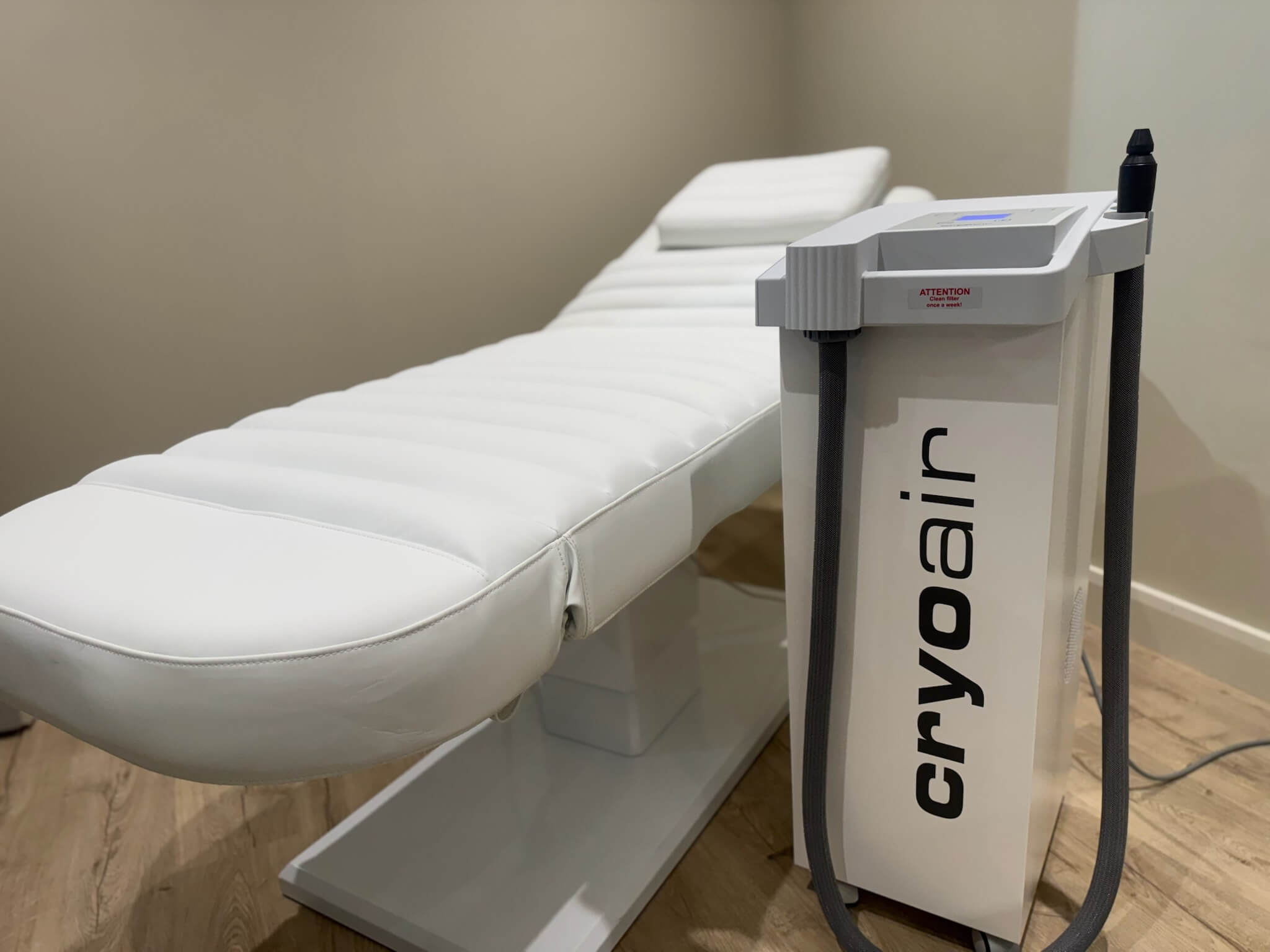
- Localised cryotherapy works differently. At Brysk, it uses directed cold air at around –32°C on a specific area, such as a knee, shoulder, calf, ankle or lower back. Because the cold is targeted rather than full-body, sessions typically last around 10–20 minutes depending on the area, sensitivity, and reason for the session.
The temperature, delivery method, treatment area and purpose are different. Whole body cryotherapy is designed to create a broader systemic response. Localised cryotherapy is designed to apply a more gradual, targeted cold stimulus to a specific area.
Different goals, different delivery – but the same principle applies: control beats excess.
Why cryotherapy is not the same as using an ice pack
Ice packs and cryotherapy both use cold, but they do not deliver cold in the same way.
An ice pack uses direct contact cold. That can feel sharper, more aggressive, and sometimes almost burning on the skin if it is held in place too long or used without enough protection.
Localised cryotherapy uses directed cold air at around –32°C, applied to a specific area in a controlled way. The sensation is usually more gradual and adjustable than direct-contact ice, which allows the cold stimulus to be applied with more control.
This can make it especially useful when someone wants targeted cold exposure without the harsher, less adjustable sensation of direct-contact ice.
The difference matters because the aim is not simply to make an area as cold as possible. The aim is to create a useful cold response while keeping the session tolerable, targeted, and appropriate for the person in front of us.
Can you stay in cryotherapy too long?
Yes – especially if intensity is prioritised over consistency.
More frequent or longer sessions don’t automatically lead to better outcomes. Like most recovery-based treatments, cryotherapy tends to work best when sessions are:
- Sensibly spaced
- Appropriately timed
- Aligned with how the body responds
- Guided by surface skin temperature rather than fixed time targets
Chasing intensity can undermine the very reason people turn to cryotherapy in the first place.
If your main concern is safety rather than timing, our guide to whether cryotherapy is safe explains how screening, protective kit and supervision work at Brysk.
How long should you wait between cryotherapy sessions?
There is no one fixed gap that suits everyone. How often cryotherapy makes sense depends on your goals, how your body responds, and what else is going on in your week.
Some people use it weekly as part of a broader recovery routine. Others may use it more regularly during heavier training periods or demanding work phases.
What matters most is not chasing frequency for its own sake. Like session length, spacing should be sensible, repeatable, and guided by how the body is responding over time.
At Brysk, cryotherapy is positioned as something to use thoughtfully, not something to overdo just because it feels productive.
If you are planning to use cryotherapy as part of a regular recovery routine, Brysk’s packs and memberships may offer better value than booking single sessions each time.
How Brysk decides cryotherapy session length
At Brysk, session length is not treated as a challenge or a tolerance test.
Sessions are:
- Guided by the body’s response
- Supervised from start to finish
- Adjusted carefully where needed
- Stopped at clear, appropriate points
The goal is not to stay in longer for the sake of it. The goal is to create the intended response in a controlled, repeatable way that feels safe, manageable, and worth returning to.
Is 2–3 minutes enough for cryotherapy?
The better question is whether the session creates the intended physiological response.
Cryotherapy uses brief, carefully timed exposure to create a specific response – not prolonged cold or endurance.
When handled properly, a brief session isn’t a compromise. That’s the point.
Why the right cryotherapy session length matters
Cryotherapy works best when it is controlled, repeatable, and used with the right expectations.
Understanding why session length matters helps people approach it properly: not as something to push, but as something to use well.
If you are unsure whether cryotherapy is right for you, the best next step is a simple conversation with the Brysk team.
Cryotherapy session length: common questions
If you’re researching how long cryotherapy should last, these are the most common follow-up questions people ask before booking their first session.
Is 3 minutes enough for cryotherapy?
Yes. Most whole body cryotherapy sessions last around 2–3 minutes because the body’s cold response happens quickly within that timeframe.
Can you stay in cryotherapy longer than 3 minutes?
Extending beyond recommended limits increases discomfort without significantly improving results. Responsible providers keep sessions within clear session limits.
How often should you do cryotherapy?
Frequency depends on individual goals and response. Some people attend weekly, others more regularly, but sessions should always be sensibly spaced.
Behind the sessions at Brysk
Cryotherapy at Brysk is delivered by a trained, hands-on team who supervise every session from start to finish.
Session length is never left to guesswork or pushed for intensity. Each session is timed deliberately, monitored throughout, and adjusted where needed based on how the body responds – not pushed beyond the intended response for the sake of intensity.
That approach is intentional. Brysk was built as a Wellness and Recovery Studio, where safety, guidance, and long-term wellbeing shape how every session is delivered.
Curious how this feels in practice?
Book a session or speak to the team if you’d like guidance before starting.