

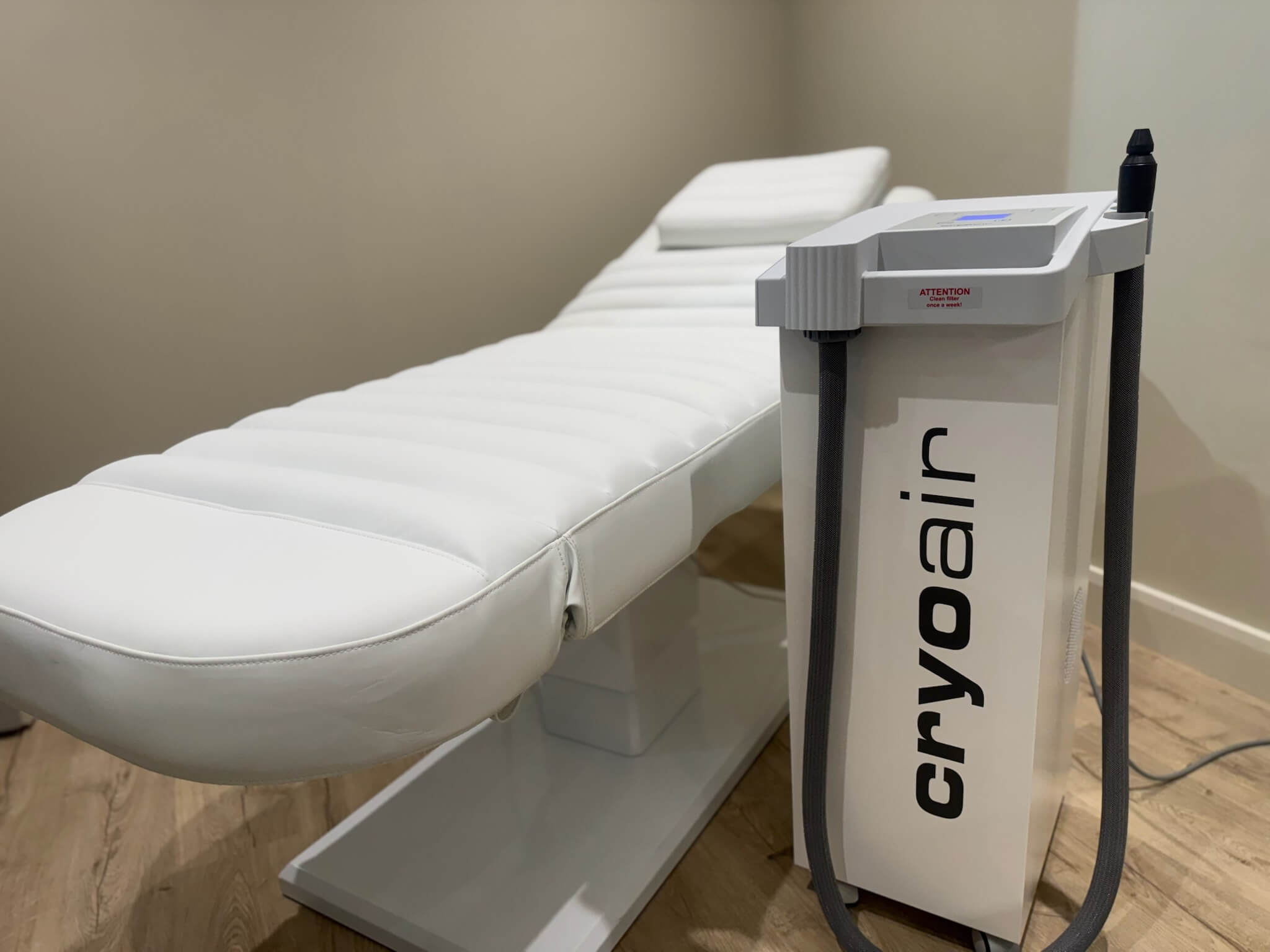
Localised cryotherapy is a targeted cold session where directed cold air at around –32°C is applied to a specific joint, muscle, or smaller area of the body.
It is different from whole body cryotherapy because the session is focused rather than full-body. Instead of stepping into a chamber for a broader cold exposure, localised cryotherapy is used when a particular area feels tighter, sorer, more irritated, or more worked than the rest.
That might be a calf after running, a knee during a busy training block, a hamstring after lower-body work, or a shoulder that feels stiff after a long week.
At Brysk in Manchester, localised cryotherapy is delivered as a practical recovery session, not a medical treatment. The aim is focused support, clear guidance, and sensible expectations.
Watch: What is localised cryotherapy?
Nathan explains how localised cryotherapy works at Brysk, including how targeted cold air is applied to specific areas of the body.
Quick answer
What is localised cryotherapy?
- Localised cryotherapy is targeted cold exposure for a specific area of the body
- It is often used when one joint or muscle feels tighter, sorer, or more worked than the rest
- You may choose it when you want focused cold support without a full-body chamber session
- It may suit recurring areas of tightness or irritation during training or busy weeks
- Whole body cryotherapy is broader. Localised cryotherapy is more focused.
Below, we’ll break down how it works, when people use it, and how to choose between localised and whole body cryotherapy.
Jump to
2. What is localised cryotherapy?
3. How does it work?
4. Whole body difference
5. Common areas
6. Is it just for injuries?
7. Ice pack difference
8. Does more work better?
9. What does it feel like?
10. Combining sessions
11. When to avoid it
12. Summary
13. FAQs
14. Book in Manchester
Localised Cryotherapy vs Whole Body Cryotherapy: At a Glance
Before going deeper, it helps to compare the two side by side.
| Point of comparison | Localised Cryotherapy | Whole Body Cryotherapy |
|---|---|---|
| Main focus | One specific area | Full-body cold exposure |
| Typical reason people choose it | A specific joint, muscle, or smaller area feels tight, sore, or overworked | Broader recovery, alertness, energy, or a full-body reset |
| How it is delivered | Directed cold air at around –32°C applied to the chosen area | Full body enters an electric cryotherapy chamber operating at –87°C |
| Session style | Targeted and practical | Short, full-body, stimulating |
| Best suited to | Focused areas that need attention | Wider recovery or wellbeing goals |
| At Brysk | Guided targeted appointment from £45 | Short chamber session from £65 |
In simple terms, localised cryotherapy is not a smaller version of whole body cryotherapy. It is a different session for a different job: focused cold support when a specific area needs attention.
What Is Localised Cryotherapy?
Localised cryotherapy is a form of targeted cold exposure where directed cold air at around –32°C is applied to a specific area of the body for a short period of time.
Rather than stepping into a chamber, you stay outside the chamber while the cold is applied directly to the area being treated.
This is why the session is usually chosen for a particular joint, muscle, or recurring tight spot, rather than general full-body recovery.
The goal is not to make the area as cold as possible for as long as possible. It is to create a short, focused cold stimulus in the area that feels like it needs attention.
At Brysk, localised cryotherapy is positioned as a practical recovery tool. It can be booked on its own, or used alongside wider recovery sessions such as whole body cryotherapy, compression boots, or red light therapy.
How Does Localised Cryotherapy Work?
Localised cryotherapy is usually explained through the way cold affects a specific area over a short period of time.
In simple terms:
- Directed cold air at around –32°C is applied to the area being treated
- The surface tissue cools quickly
- Blood vessels near the surface temporarily narrow as part of the body’s cold response
- Circulation changes again as the area naturally rewarms after the session
This cold-to-warm response is one reason localised cryotherapy is often used when an area feels tight, overworked, irritated, or more noticeable than usual.
It is important not to overstate this.
Cold application has a long history in sports, recovery, and physical therapy settings, but research around cold therapy and recovery is mixed, especially when measuring complex outcomes like pain, recovery speed, or return to activity across different protocols and injury types.
That is why Brysk does not position localised cryotherapy as injury treatment, diagnosis, or a shortcut to healing.
It is better understood as focused cold support for a specific area, delivered in a guided studio setting.
As with any recovery modality, localised cryotherapy is not automatically appropriate for every person or every situation, which is why Brysk approaches sessions with clear guidance and suitability boundaries.
How Is Localised Cryotherapy Different to Whole Body Cryotherapy?
The main difference is focus.
Whole body cryotherapy is a broader chamber-based session. At Brysk, it involves stepping into an electric cryotherapy chamber operating at –87°C for a short, supervised cold exposure session.
This option is often chosen when the goal is a full-body reset, something energising, or broader recovery support after training, work, or a demanding week.
If you want a step-by-step look at the chamber experience itself, we’ve also explained what happens before, during and after cryotherapy at Brysk.
Localised cryotherapy is more specific. Directed cold air at around –32°C is applied to one chosen area, so it may make more sense when the issue feels more focused – for example, a calf, knee, hamstring, lower back, shoulder, elbow, or ankle.
A simple way to choose between them is this:
Choose localised cryotherapy if:
- One joint or muscle feels more worked than the rest
- You want targeted cold support
- A full-body chamber session feels broader than you need
- You want a shorter, more focused appointment
- You are comparing price, time, and outcome for one specific area
Choose whole body cryotherapy if:
- You want broader cold exposure
- Your whole body feels tired or heavy
- You want something short, sharp, and energising
- You are not focused on one specific joint or muscle
- You want the full chamber experience
Neither option is automatically better. They are designed for different situations.
Not sure which cryotherapy is right for you?
If you’d rather talk things through before booking, message the Brysk team directly and ask anything – from suitability to what your first session would feel like. No pressure. No obligation.
Common Areas People Use Localised Cryotherapy For
Localised cryotherapy is usually used for smaller or more specific areas of the body.
Common examples include:
- Calves
- Hamstrings
- Quads
- Knees
- Glutes
- Shoulders
- Elbows
- Ankles
- Lower back
For active people, lower-body areas are often common choices. Running, Hyrox-style training, lifting, football, CrossFit, and long days on your feet can all leave one area feeling more worked than the rest.
But localised cryotherapy is not only for athletes. It may also suit desk-based workers, busy professionals, people on their feet for long periods, or anyone dealing with a specific area of tightness or discomfort.
The important point is that localised cryotherapy is not a cure for the underlying reason an area feels stiff or sore. If something is persistent, worsening, or linked to an injury, it should be assessed properly by an appropriate professional.
Is Localised Cryotherapy Just for Injuries?
Not necessarily. Localised cryotherapy is often discussed in injury-heavy language, but that is not the only way people use it.
You will see phrases like “healing”, “sports medicine”, “post-surgical recovery”, and “return to play” used quite freely online.
At Brysk, we keep the positioning more measured.
Localised cryotherapy may be useful when one area feels:
- Tight
- Sore
- Irritated
- Overworked
- Stiff
- More noticeable than usual
But it is not positioned as injury treatment.
That distinction matters.
If you have an injury, persistent pain, a recent surgical site, or symptoms that need diagnosis, localised cryotherapy should not replace medical advice, physiotherapy, or proper rehabilitation.
A session may help the area feel different in the short term, but feeling different is not the same thing as being fixed.
That is why Brysk treats localised cryotherapy as recovery support, not a medical solution.
How Is Localised Cryotherapy Different From an Ice Pack?
Both involve cold, but they do not feel the same in practice.
An ice pack is static. You apply it to one area and leave it there for a set period of time.
Localised cryotherapy uses directed cold air at around –32°C, applied in a more controlled, guided way.
The sensation tends to feel different as well. Ice packs create direct-contact cold, which can feel sharper and more aggressive on the skin. Localised cryotherapy uses moving cold air instead, which often feels more adjustable and gradual during the session.
The session is designed to feel more targeted and controlled than simply holding static ice against the skin.
An ice pack may suit simple at-home cold application. Localised cryotherapy may appeal when someone wants:
- A more guided session
- A more controlled and targeted cold application
- A studio-based option
- Support from someone applying the cold correctly
- A session that fits into a wider recovery routine
That does not mean localised cryotherapy is automatically “better” than ice for every situation.
The better question is: what are you trying to achieve, and what level of guidance do you want?
For some people, an ice pack is enough. For others, a more structured localised cryotherapy session feels more useful.
Does Localised Cryotherapy Work Better If You Do More?
Not necessarily. With any form of cold exposure, dose matters.
Duration, frequency, area treated, and how your body responds all matter. A 2019 systematic review looking at cryotherapy methods in athletes found that outcomes were inconsistent across protocols, and that longer icing times were associated with short-term detrimental effects on muscle power and activity.
That does not mean localised cryotherapy should be avoided. It means the session should be used with a clear purpose rather than treated as something to push indefinitely.
At Brysk, the same principle applies across both whole body and localised cryotherapy: use the right session for the right reason, and avoid chasing intensity for its own sake.
The aim is not to see how much cold you can tolerate. The aim is to use the session appropriately.
That same principle is covered in more detail in our guide to why cryotherapy session length matters.
What Does a Localised Cryotherapy Session Feel Like?
Localised cryotherapy feels very cold, but focused.
Because directed cold air at around –32°C is applied to one area, the sensation is more targeted than a chamber session. Many clients describe it as very cold, focused, and refreshing rather than painful.
The session is guided throughout, so you are not left to work it out alone.
At Brysk, the team will confirm the area being treated, explain what will happen, and guide the session from start to finish.
The Brysk team adjusts the session depending on the area being treated and how the cold is responding.
Afterwards, some people say the area feels:
- Fresher
- Looser
- Calmer
- Less irritated
- Easier to move
Others notice more subtle changes.
As with most recovery sessions, the response can vary. That is why Brysk avoids promising a specific outcome from one visit.
Can You Combine Localised Cryotherapy With Other Brysk Sessions?
Yes. Some people use localised cryotherapy on its own, while others combine it with broader sessions such as whole body cryotherapy, compression boots, or red light therapy.
The important thing is to choose based on your goal, not to stack treatments just because more sounds better. Localised cryotherapy is usually the focused option when one area needs attention; other sessions may make more sense when the goal is broader recovery or relaxation.
When Should You Avoid Localised Cryotherapy?
Localised cryotherapy should not be used over every area or in every situation.
You should avoid or seek advice before using localised cryotherapy over areas with:
- Open wounds
- Active infection
- Impaired sensation
- Recent surgical sites
- Active deep vein thrombosis
- Skin that is broken, highly sensitive, or not responding normally
If something feels unusual, persistent, or concerning, the right step is medical guidance – not simply applying cold and hoping it settles.
At Brysk, localised cryotherapy is not a substitute for:
- Physiotherapy
- Medical diagnosis
- Imaging
- Rehabilitation
- Treatment for an injury or condition
A responsible studio should be willing to say when a session is not appropriate.
That is not a negative. It is part of delivering the service properly.
So, What Is Localised Cryotherapy?
Localised cryotherapy is targeted cold support where directed cold air at around –32°C is applied to a specific joint, muscle, or smaller area of the body.
It is usually chosen when one area feels tighter, sorer, more irritated, or more worked than the rest. At Brysk, localised cryotherapy in Manchester is delivered as a guided appointment from £45, with cold application usually lasting around 10–20 minutes depending on the area and how the body responds.
If you’re comparing localised and chamber-based sessions by price, it may also help to read what you’re actually paying for in a cryotherapy session.
It is not a medical treatment, not a shortcut to healing, and not a replacement for proper diagnosis or rehab where that is needed.
For the right person, at the right time, it can be a useful targeted recovery session – especially when a full-body chamber session feels broader than you need.
FAQs
If you’re comparing localised cryotherapy with whole body cryotherapy, these are the practical questions people usually ask before booking.
What is localised cryotherapy?
Localised cryotherapy is a targeted cold session where directed cold air at around –32°C is applied to one specific joint, muscle, or smaller area of the body. It is often chosen when one area feels tighter, sorer, or more worked than the rest.
How is localised cryotherapy different from whole body cryotherapy?
Whole body cryotherapy exposes the whole body to cold inside a chamber. Localised cryotherapy applies directed cold air at around –32°C to one specific area, such as a knee, calf, shoulder, hamstring, or lower back.
Is localised cryotherapy better than whole body cryotherapy?
Not necessarily. Localised cryotherapy may be better if one specific area needs attention. Whole body cryotherapy may be better if you want a broader cold exposure session or full-body reset.
What areas can localised cryotherapy be used on?
Common areas include calves, hamstrings, knees, shoulders, elbows, ankles, glutes, and lower back. The right area depends on what feels tight, sore, or more worked than usual.
Is localised cryotherapy just for athletes?
No. Athletes and gym-goers often use it, but localised cryotherapy can also suit busy professionals, desk-based workers, or anyone dealing with one specific area of tightness or discomfort.
Can localised cryotherapy help an injury?
Localised cryotherapy may be used around areas that feel sore, stiff, or irritated, but it is not an injury treatment and should not replace physiotherapy, diagnosis, or medical advice.
Does localised cryotherapy hurt?
Most people describe it as very cold and focused, but manageable. The session is short and guided throughout.
How long does localised cryotherapy take at Brysk?
Localised cryotherapy at Brysk is delivered within a guided appointment, with the cold application itself usually lasting around 10–20 minutes depending on the area being treated and how the body responds.
How much does localised cryotherapy cost at Brysk?
A single localised cryotherapy appointment at Brysk is £45. Packages and memberships are available for regular use.
Can I combine localised cryotherapy with whole body cryotherapy?
Yes. Some people use localised cryotherapy on its own, while others combine it with whole body cryotherapy when they want both targeted and broader cold support.
Where can I try localised cryotherapy in Manchester?
Brysk offers localised cryotherapy in Manchester city centre, just off St Ann’s Square and behind Barton Arcade.
Book Localised Cryotherapy in Manchester
If one specific area feels tighter, sorer, or more worked than the rest, localised cryotherapy may be a practical place to start.
Brysk offers guided localised cryotherapy appointments in Manchester city centre from £45, delivered in a calm, supervised studio setting.
For people using localised cryotherapy more regularly, packs and memberships may offer better value than booking one-off sessions each time.
Want focused cold support for one specific area?
Book a session or speak to the team if you’d like help choosing between localised and whole body cryotherapy.
References
- Jinnah AH, Luo TD, Mendias C, Freehill M. Cryotherapy duration is critical in short-term recovery of athletes: a systematic review. Journal of ISAKOS. 2019;4(3):131–136.
- Bleakley C, McDonough S, MacAuley D. The use of ice in the treatment of acute soft-tissue injury: a systematic review of randomized controlled trials. Database of Abstracts of Reviews of Effects (DARE). 2004.